Your logo on the chest, a woven label, a back print, a colour from your brand book: Gabi designs the changes with you in the Studio and prices the finished piece before you order it. Your logo file goes on as you supply it.
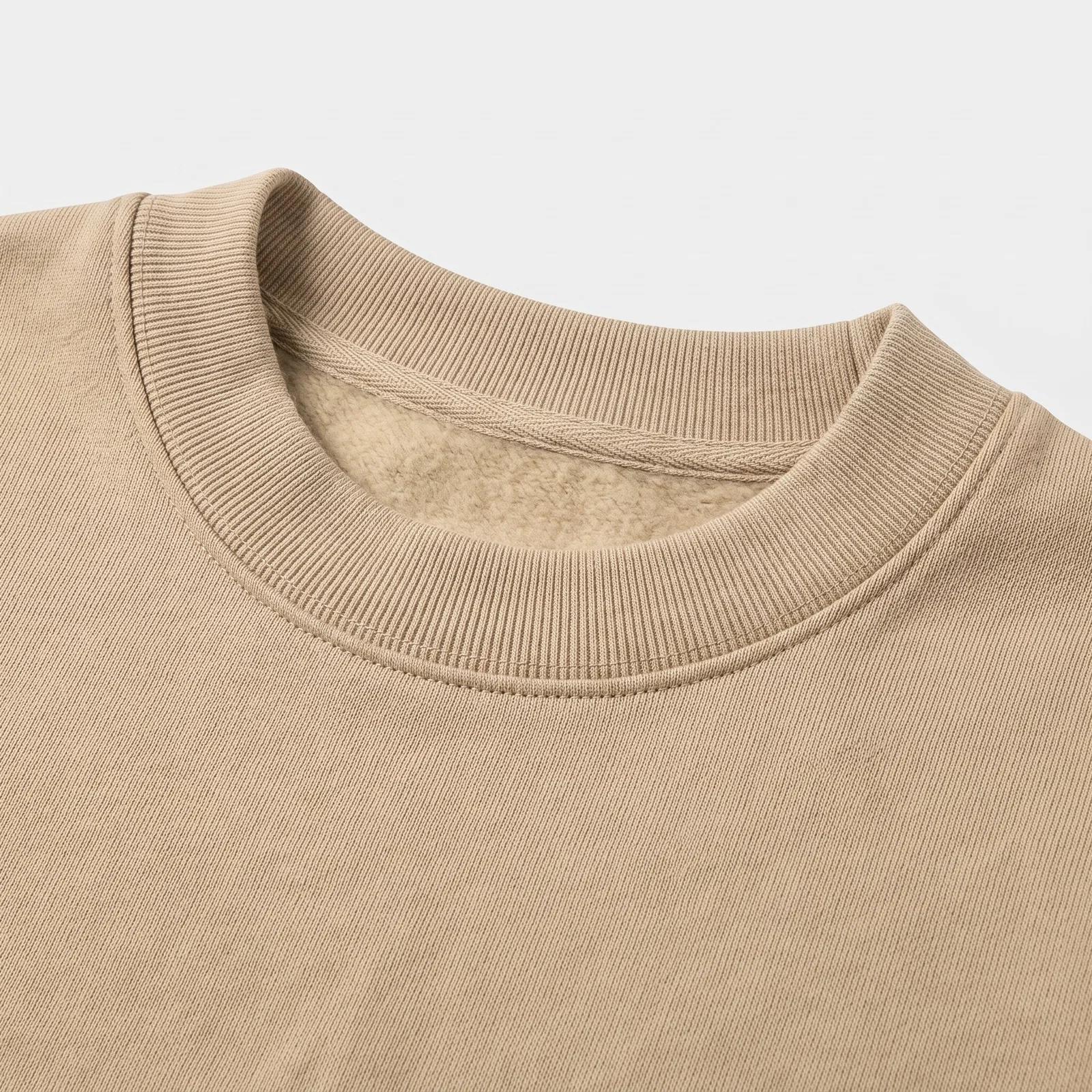
Close-upFabric and finish
Replaced if faultyMade to order, so no change-of-mind returns. Anything that arrives damaged or defective, we make right.
Try one firstOne unit in Premium, made like the run, through the same checkout.
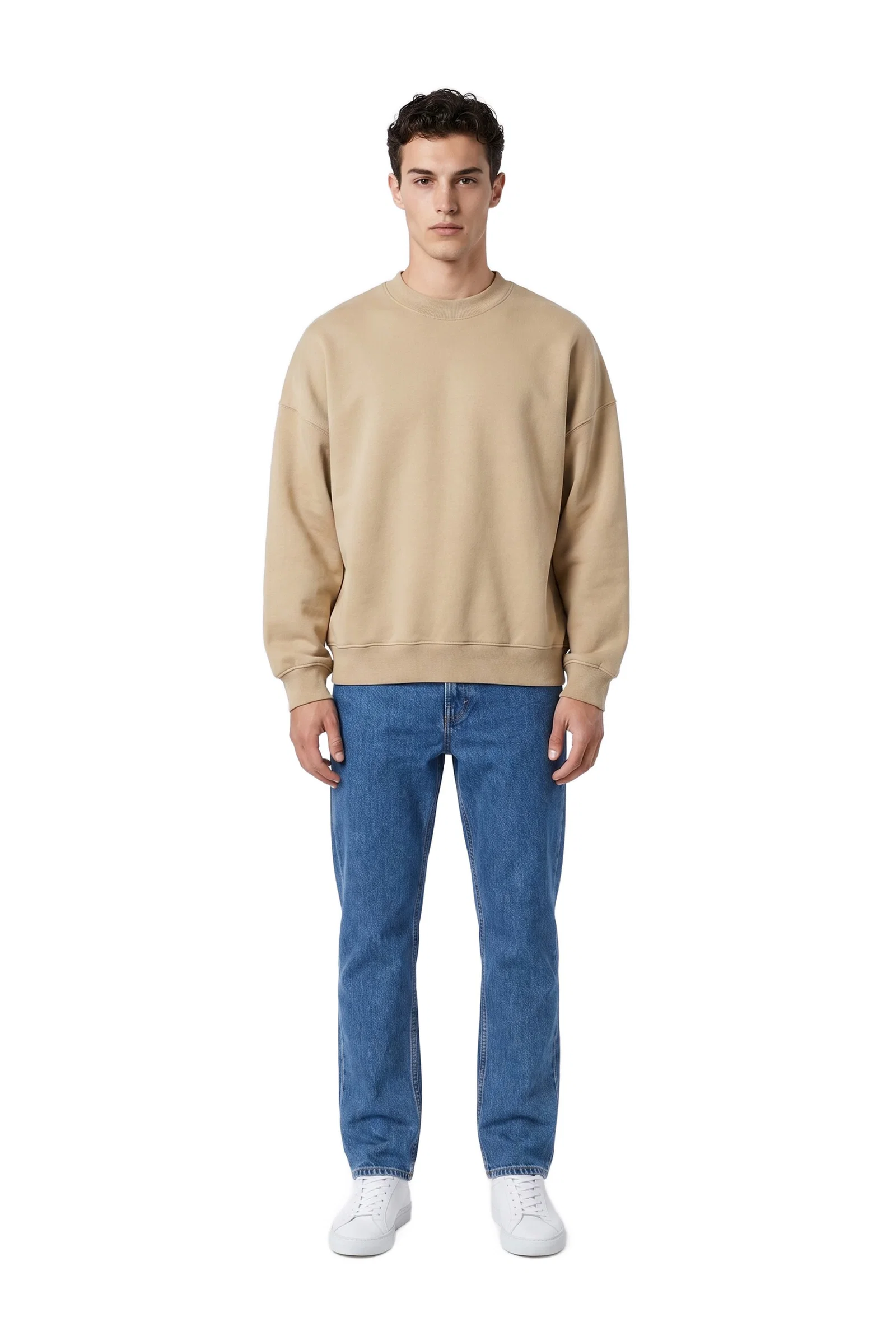
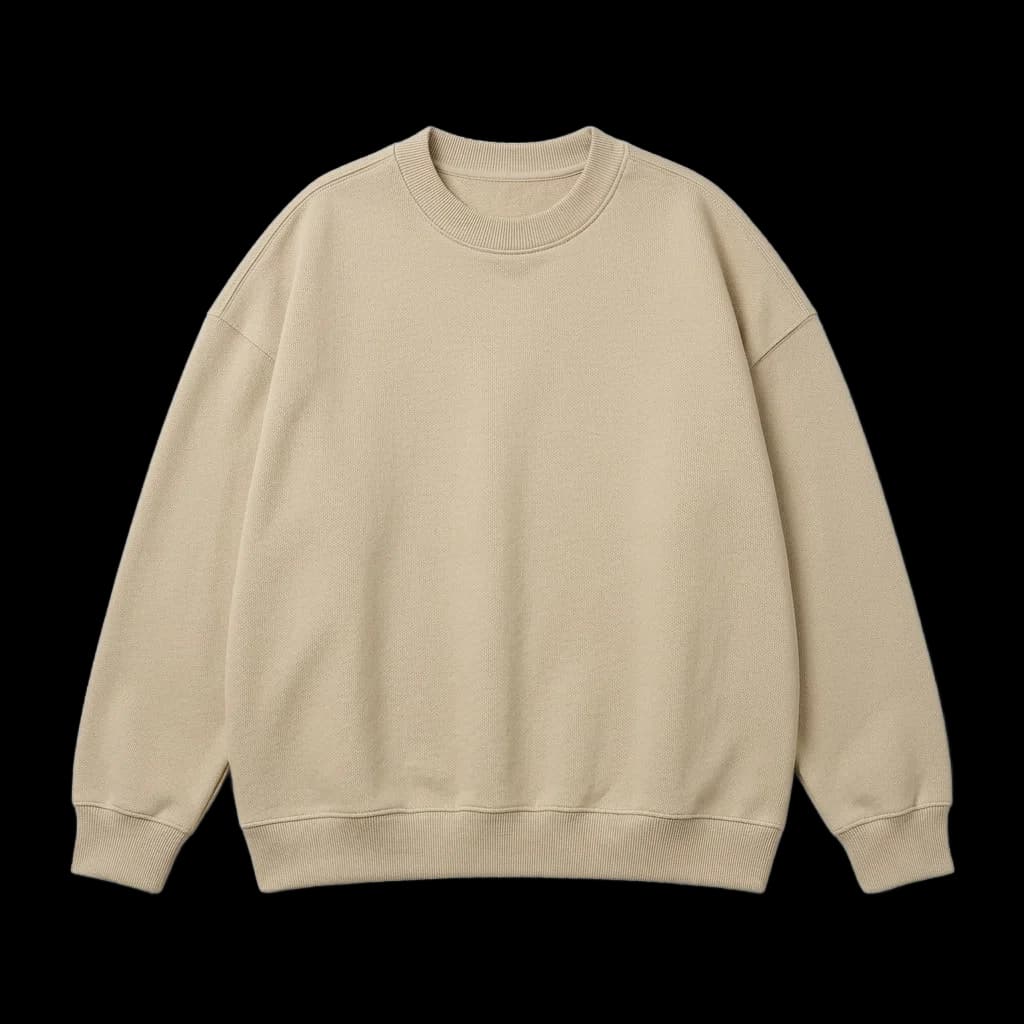
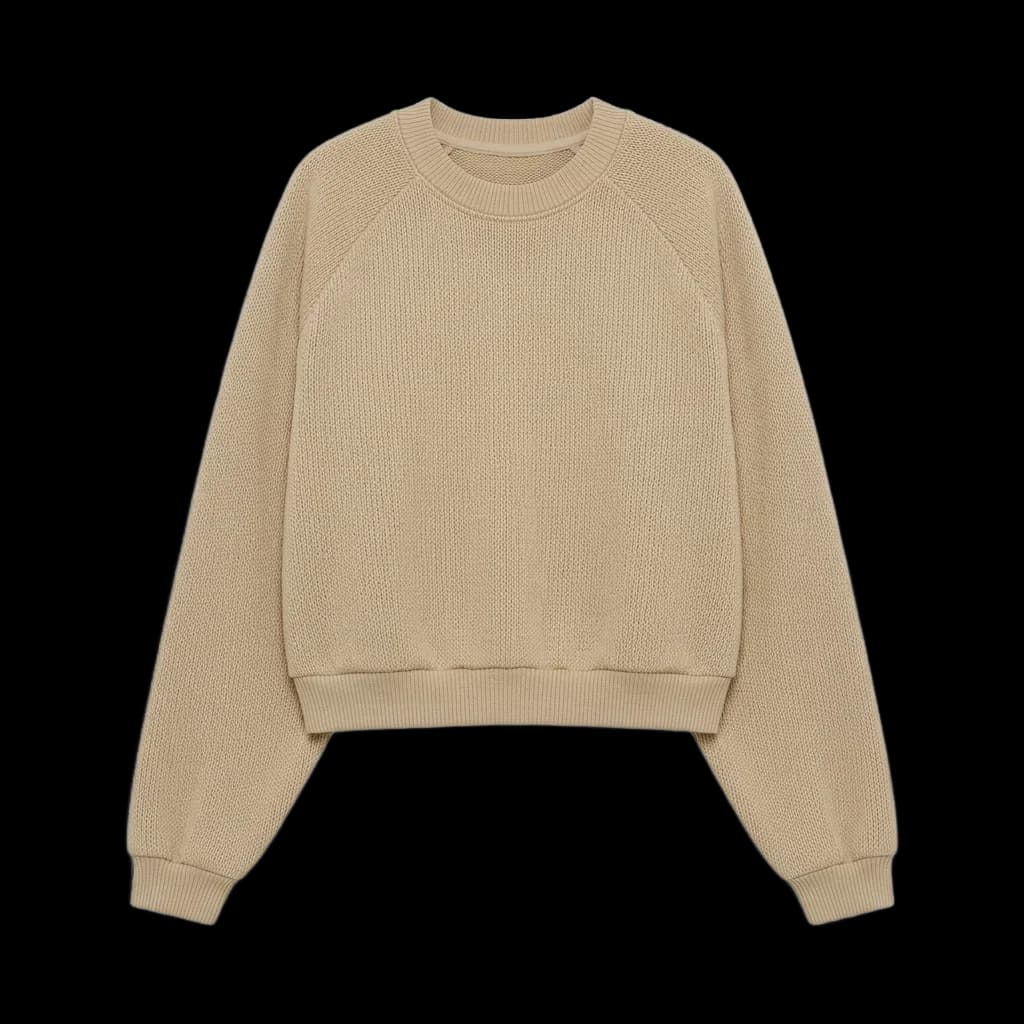
A boxy, oversized pullover with a straight body cut to regular length and a ribbed crewneck collar. Drop shoulders set the sleeves low, creating an 8 cm extension past the shoulder line, while ribbed cuffs and a straight rib-trimmed hem close the shape. The garment hangs away from the torso in a structured, relaxed fit.
Specs
GradePremium, Heavyweight Cotton Fleece
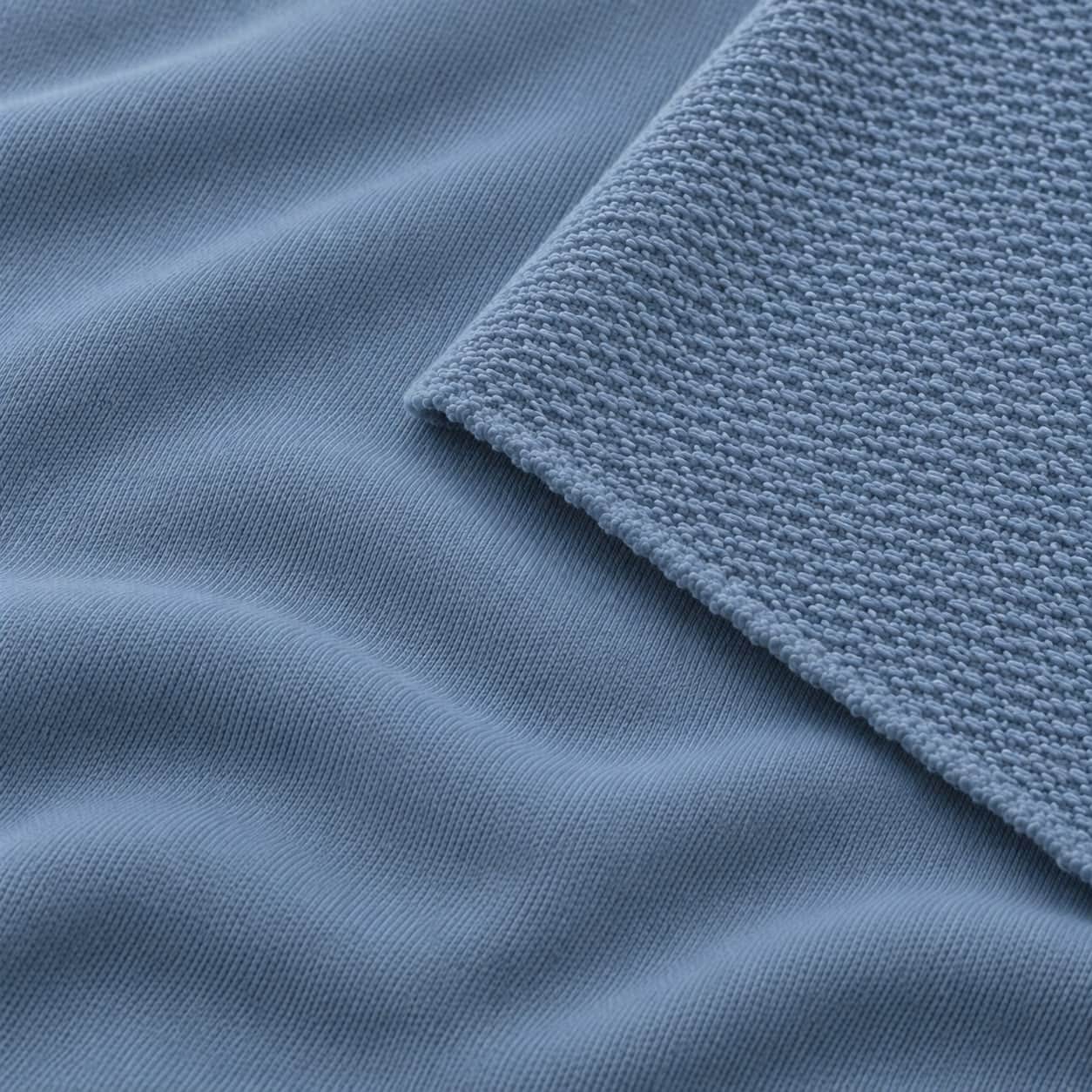
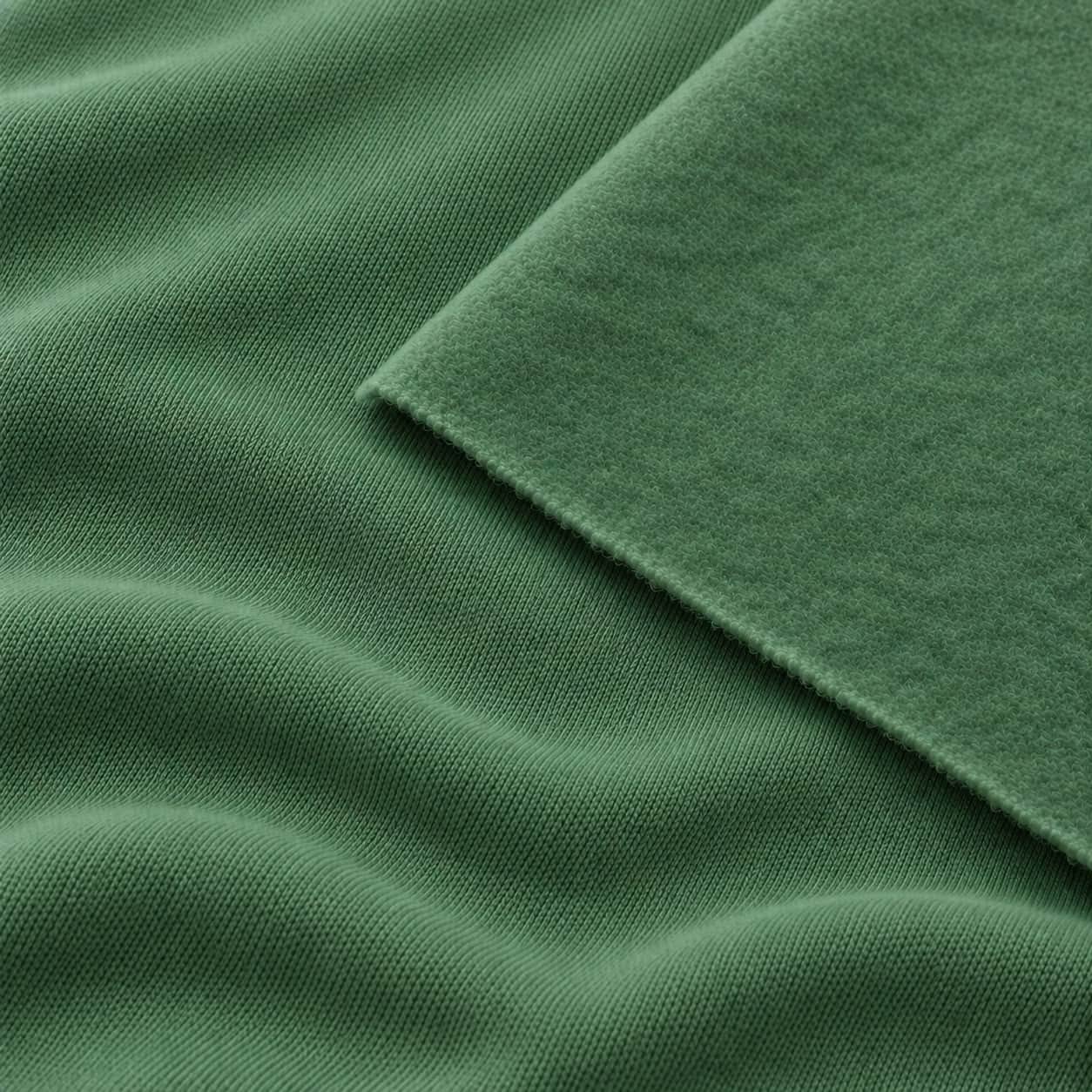
Main Fabric100% Cotton, 380gsm
Rib Knit95% Cotton / 5% Elastane
Neck Tape100% Cotton
FitOversized
SilhouetteBoxy, oversized
LengthRegular
NecklineRibbed crewneck collar
SleeveSet-in drop sleeve
HemStraight with rib trim
ClosurePullover
CareMachine wash at 30°C on a gentle cycle, Do not bleach, Do not tumble dry
Minimum orderNone, from 1 unit
Size guide
cm
XXS
XS
S
M
L
XL
XXL
Bust
54.5
57
59.5
62
64.5
67
69.5
Length
66
68
70
72
74
76
78
The garment measured flat: compare it with one you own.
Before the zip-up. There was the sweatshirt. Just a crewneck, some fleece, and a vision — born on the training field, stolen by the street, claimed by luxury. Champion invented it. Hip-hop immortalised it. Balenciaga charges $450 for it. And the design? Still belongs to everyone. That's the sweatshirt. The garment that refused to stay in its lane.
A sweatshirt costs between $22 and $42 per unit landed, depending on material tier and factory region. A standard conventional cotton fleece crewneck at 300 units from China lands at approximately $22–$28 per unit, including fabric, CMT, trims, finishing, freight, and duties. Premium sweatshirts using GOTS-certified organic cotton from Turkey land at $35–$45 per unit at the same volume.
The best fabric for sweatshirt manufacturing is 280–340 GSM combed ring-spun cotton fleece or French terry. French terry (looped interior) is lighter and more versatile for year-round wear; fleece (brushed interior) is warmer and standard for winter-weight sweatshirts. Cotton/polyester blends should only be used when price is the absolute priority — they pill faster and last significantly less than 100% cotton constructions.
A standard sweatshirt should be 260–320 GSM for everyday wear, 220–260 GSM for lightweight styles, and 340–440 GSM for premium heavyweight streetwear. Below 240 GSM reads as a promotional or low-quality product.
French terry has a smooth outer surface and looped interior — lighter, cooler, and more versatile across seasons. Fleece has a brushed interior creating a soft, warm surface — heavier and warmer. French terry (220–300 GSM) suits fashion and year-round basics; fleece (260–360 GSM) is standard for winter-weight sweatshirts.
The minimum order quantity for sweatshirts is typically 300 to 500 units per colourway at standard factories, with smaller runs of 50 to 100 units accessible through specialist networks like Sparkit. Blank crewneck basics can be sampled from 12 units minimum.
Sweatshirt manufacturing takes between 30 and 96 days from order to delivery. China is fastest for sampling at 4 to 6 days for a standard crewneck; full production plus sea freight to the UK totals 57 to 83 days. Turkey offers the fastest European delivery at 30 to 50 days total.
Sweatshirts pill because fleece fibers rub and tangle into balls — accelerated by short-staple cotton or polyester content. Specify anti-pill finish in your fabric order and choose combed ring-spun or long-staple cotton. Anti-pill finishing is one of the simplest quality upgrades available.
Luxury sweatshirts use 360–440 GSM long-staple Pima or Egyptian cotton with a full finish stack including silicone softener, enzyme wash, anti-pill, and often garment dyeing. High street versions typically use 220–260 GSM CVC blends with no finishing. The rib quality at neckline, cuffs, and waistband is the most immediately visible quality signal.
A sweatshirt is a hoodie without the hood — simpler to produce, less fabric, lower CMT. The absence of hood panels, drawstring tunnel, and aglets reduces CMT by approximately 20–30% and fabric consumption by 0.45–0.55m per unit. Both use the same fleece or French terry fabric family and rib components at cuffs and waistband.
Prevent neckband stretch by specifying rib weight and tension in your tech pack and requesting a 5-cycle wash test before bulk production. Specify 1x1 rib for standard crewnecks and 2x2 rib for a bolder, more structured neckline with better shape retention over time.
Yes, regenerative cotton delivers the strongest sustainability credential in fashion without any performance trade-off. The sweatshirt — as a high-consideration, long-wear purchase — is an ideal vehicle for communicating regenerative credentials at a retail price of $120–$180.
CMT stands for Cut, Make, and Trim — the core labour cost covering cutting all panels, sewing them together, and attaching all trims including labels and ribbed components. For a standard crewneck, CMT ranges from $6.00 to $9.00 per unit at affordable tier in China or Vietnam, up to $18.00 to $28.00 at luxury tier in Portugal or Turkey.