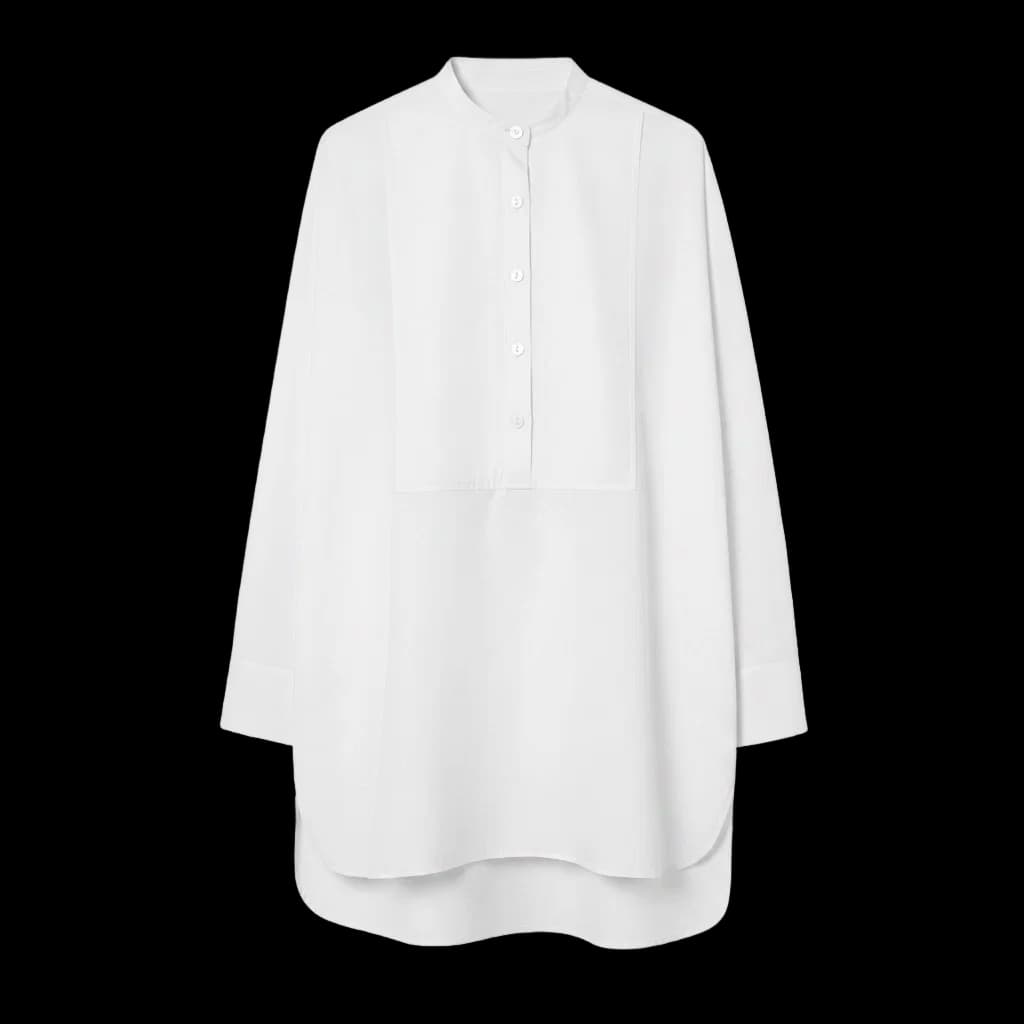
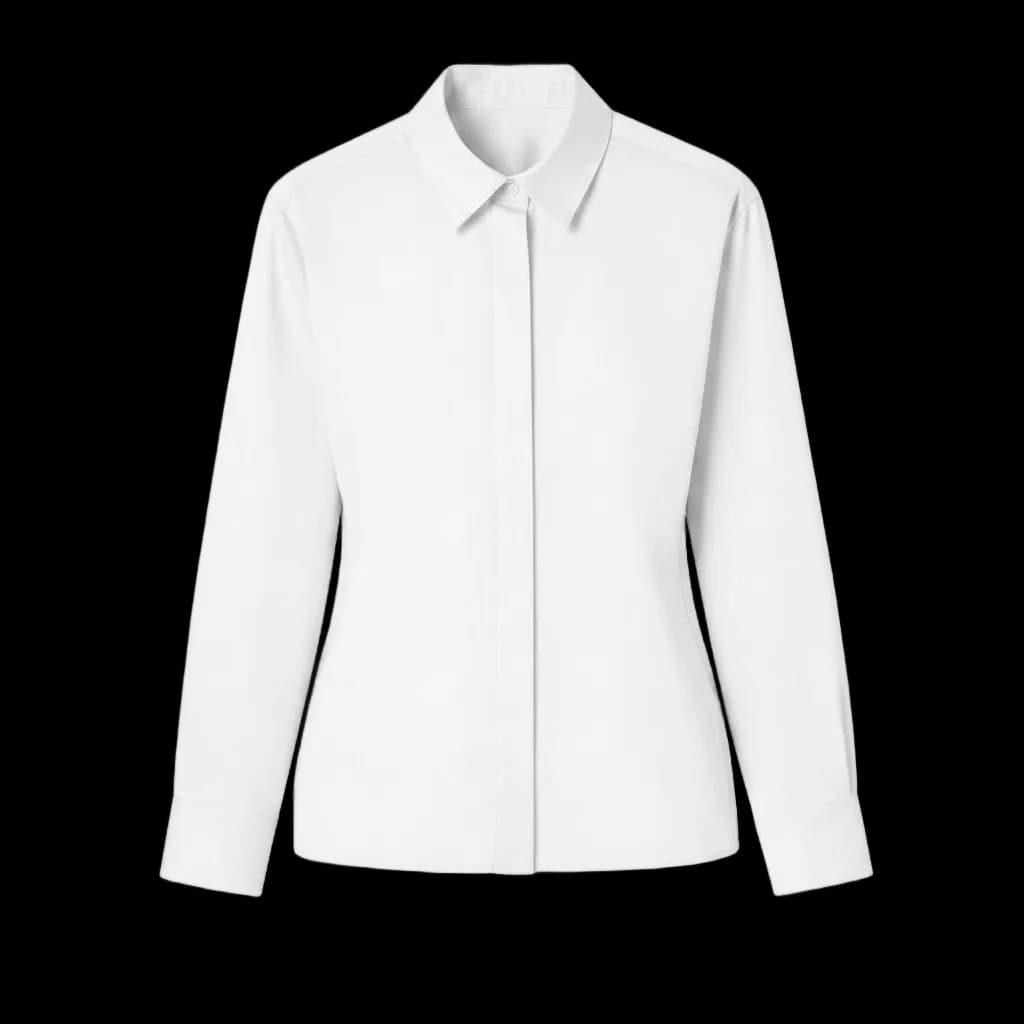
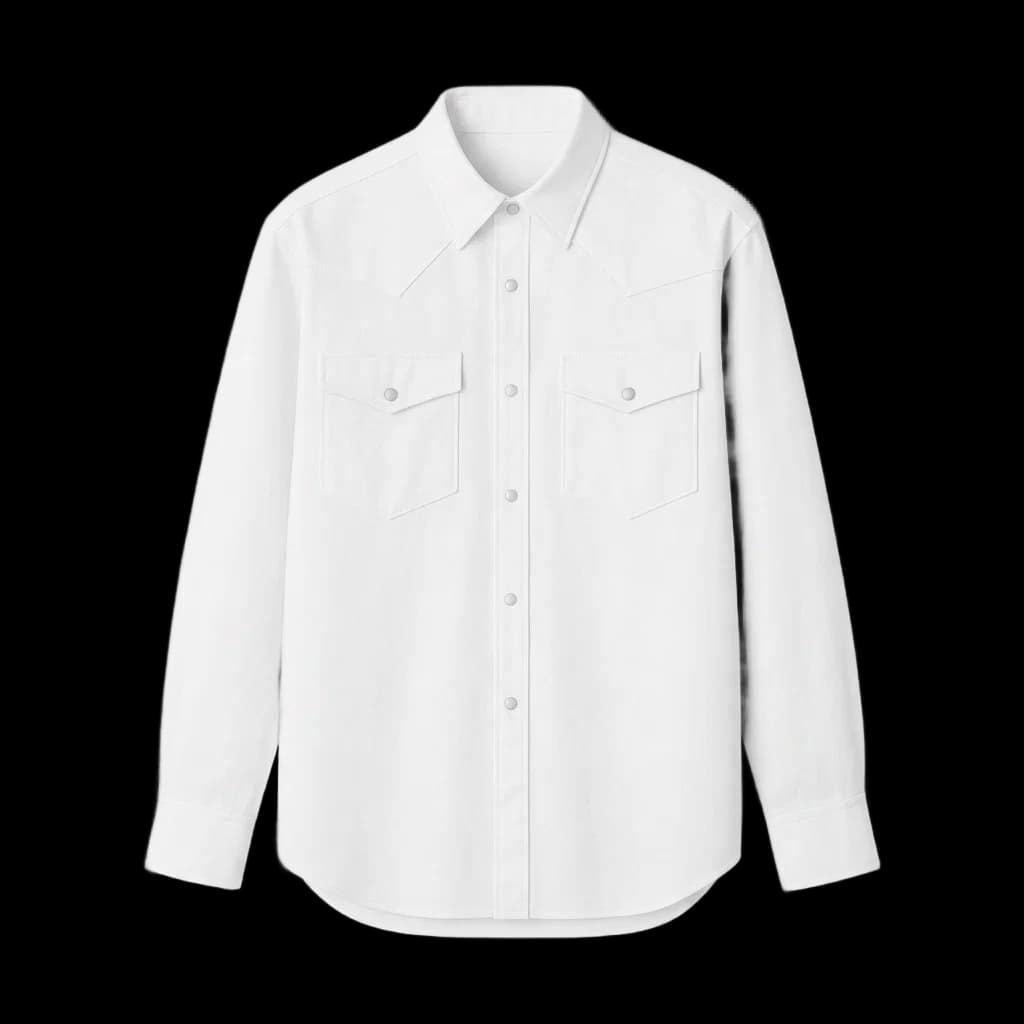
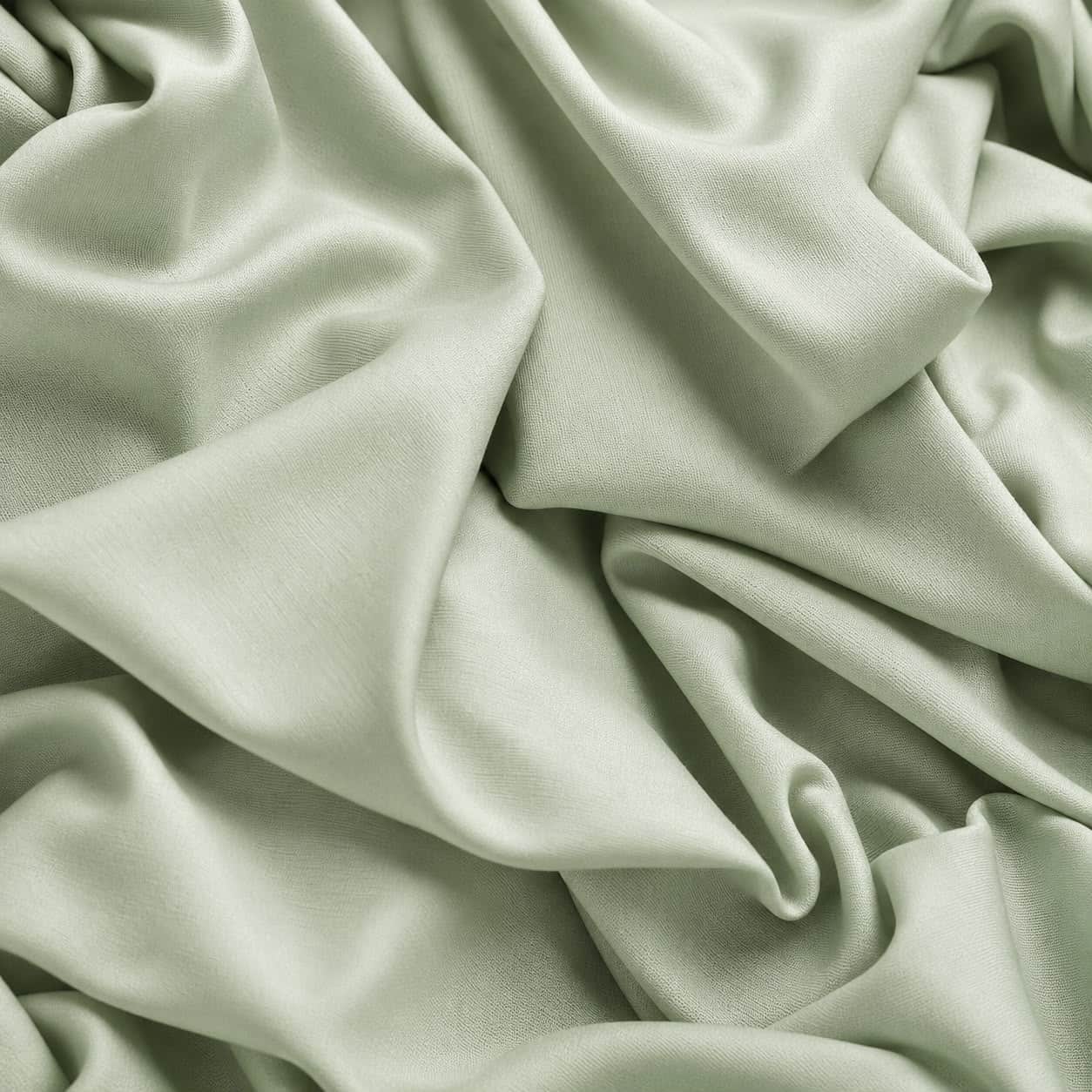
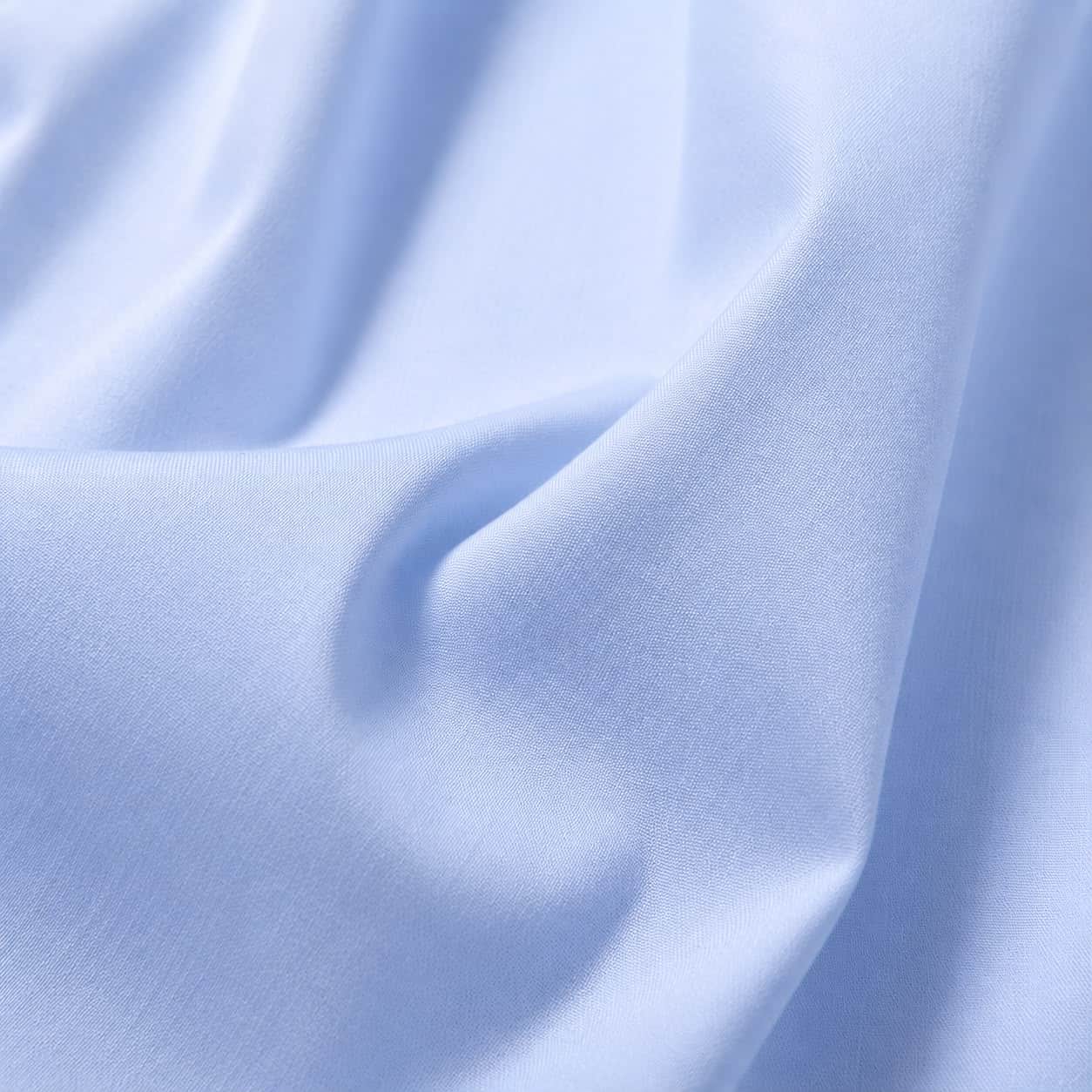
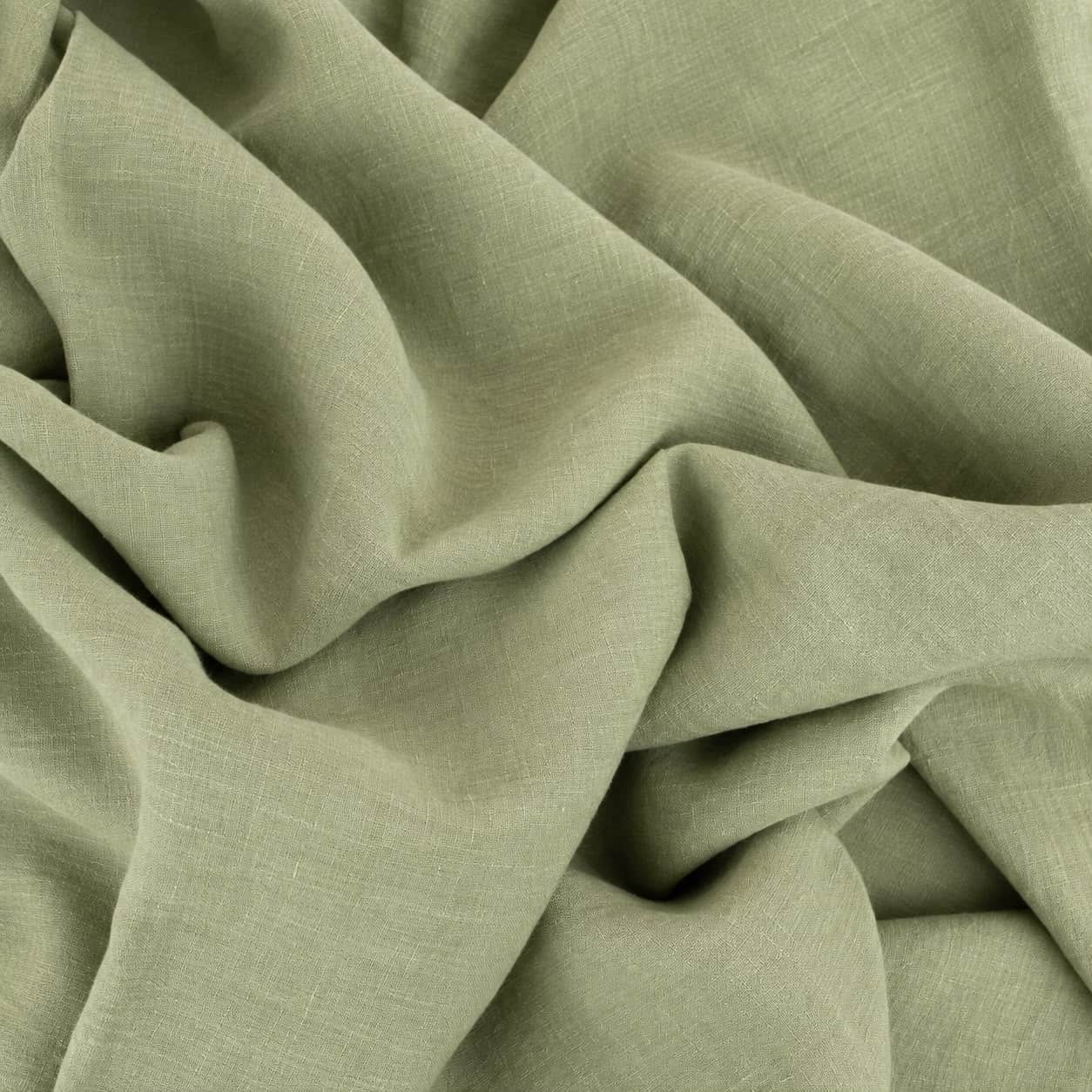
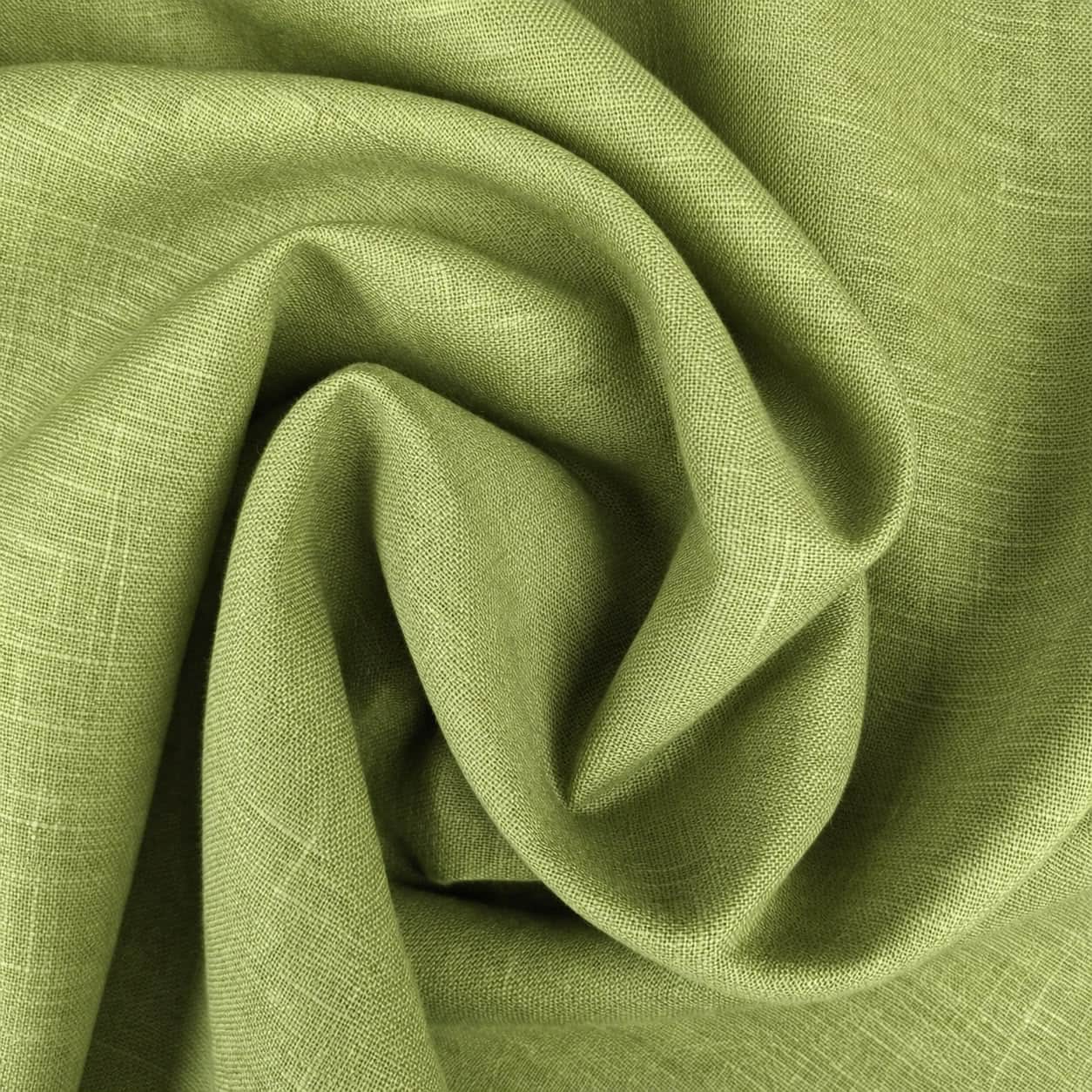
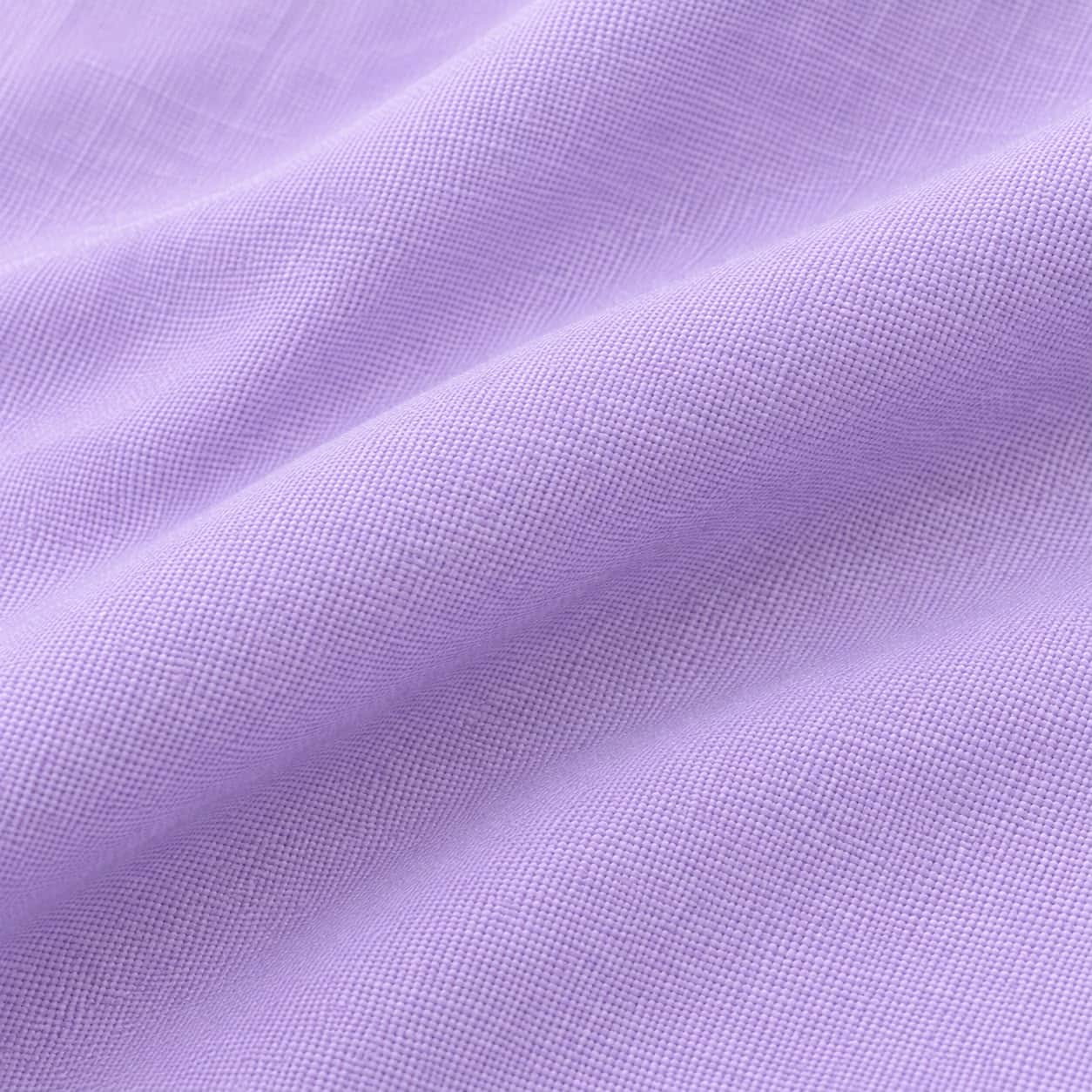
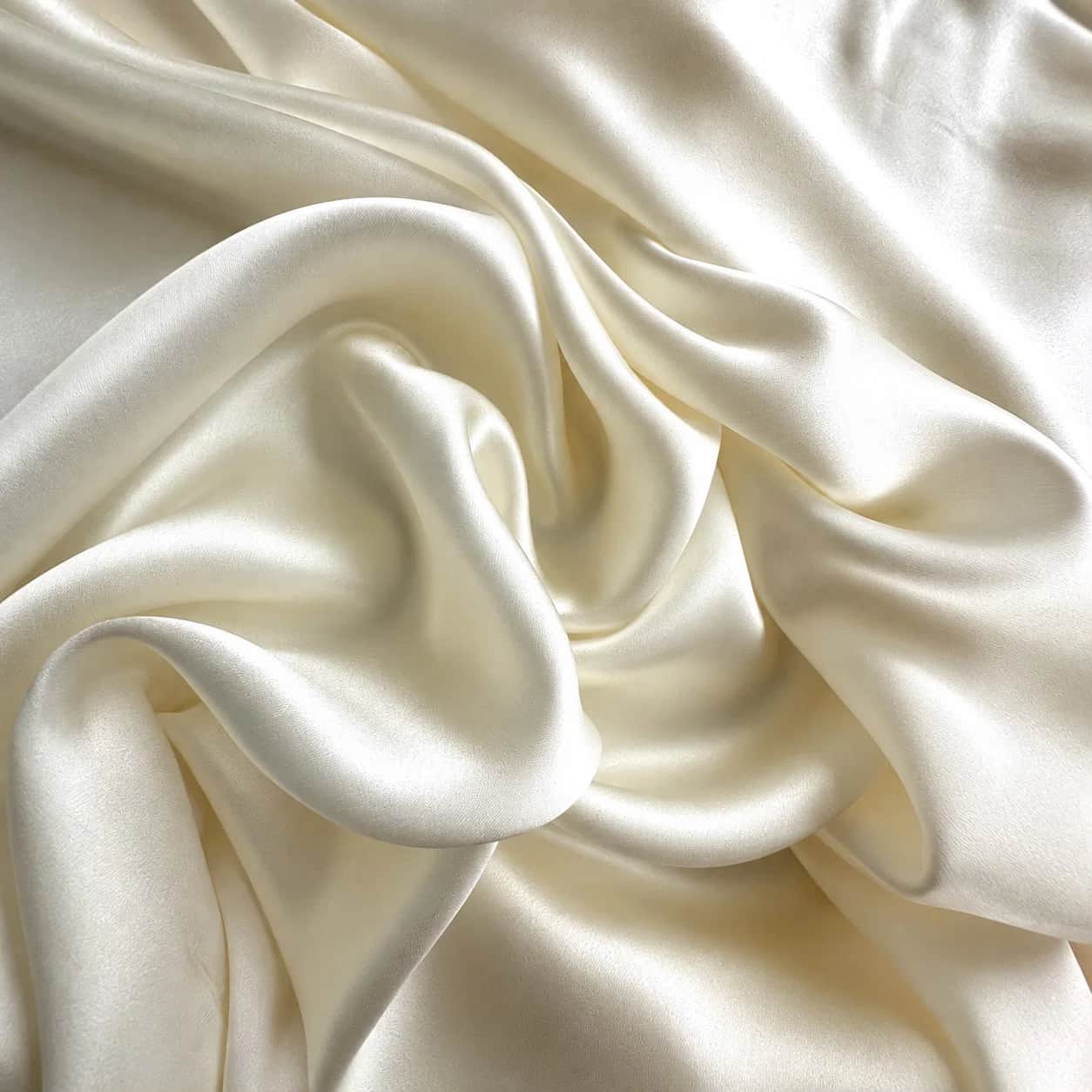
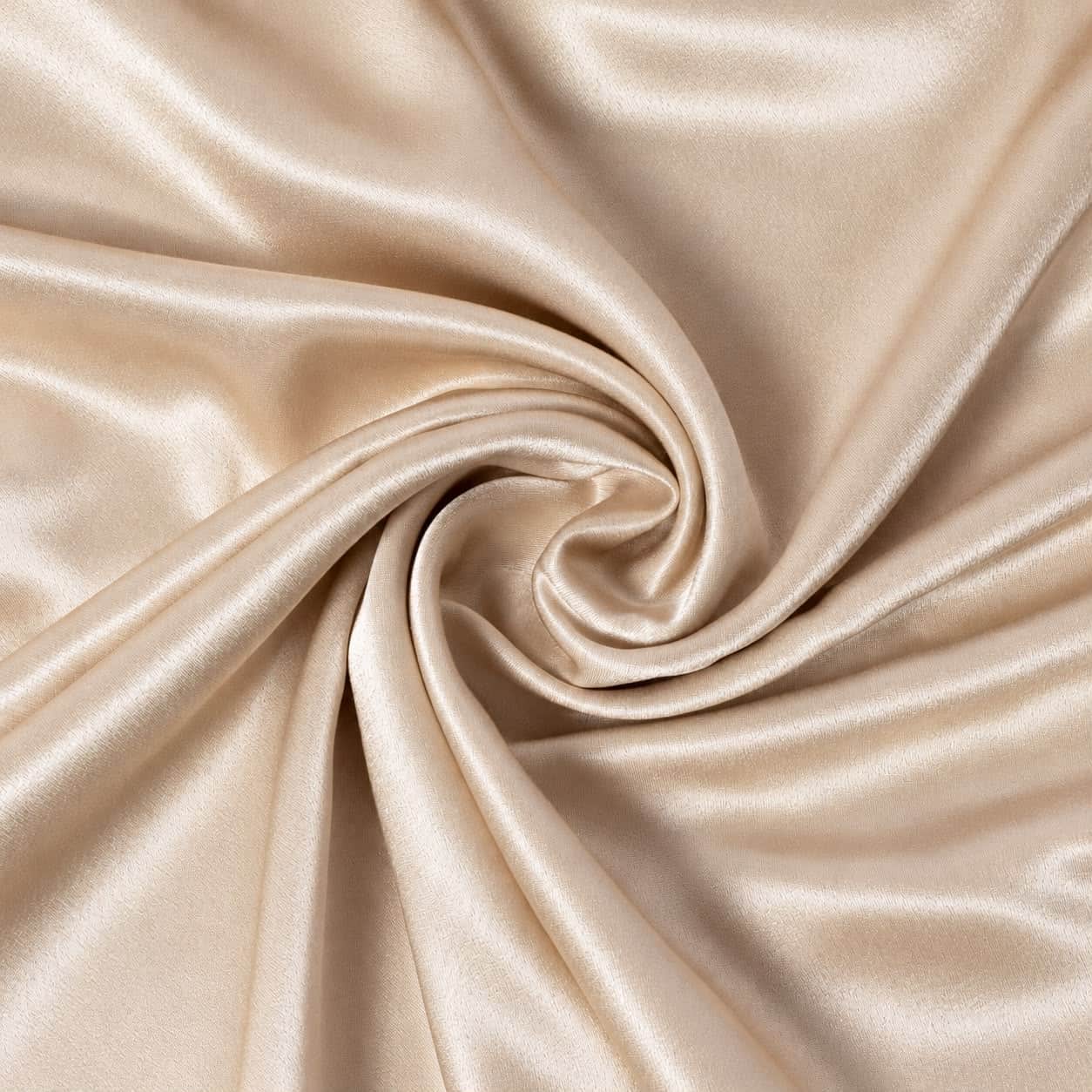
Your logo on the chest, a woven label, a back print, a colour from your brand book: Gabi designs the changes with you in the Studio and prices the finished piece before you order it. Your logo file goes on as you supply it.
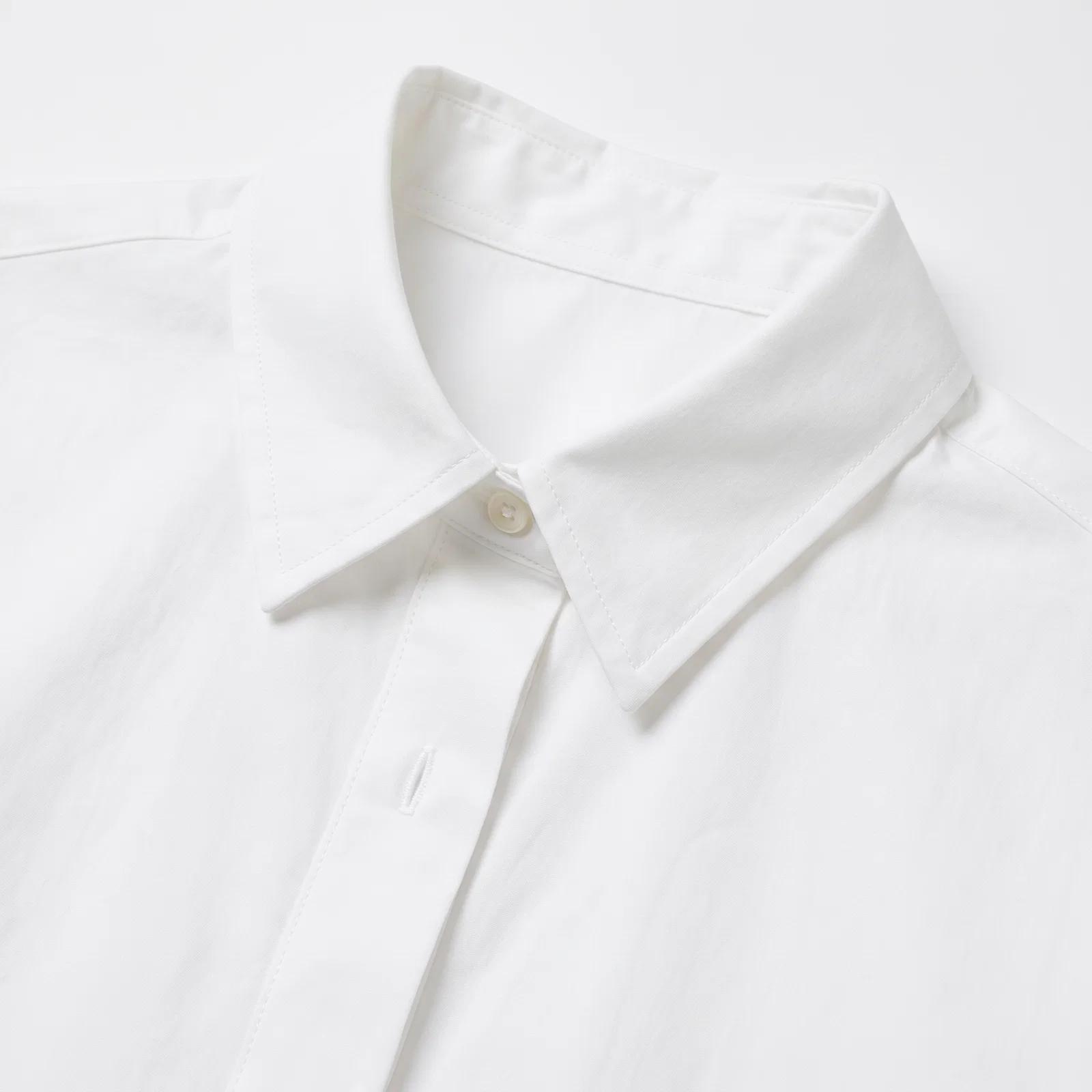
Close-upFabric and finish
Replaced if faultyMade to order, so no change-of-mind returns. Anything that arrives damaged or defective, we make right.
Try one firstOne unit in Premium, made like the run, through the same checkout.
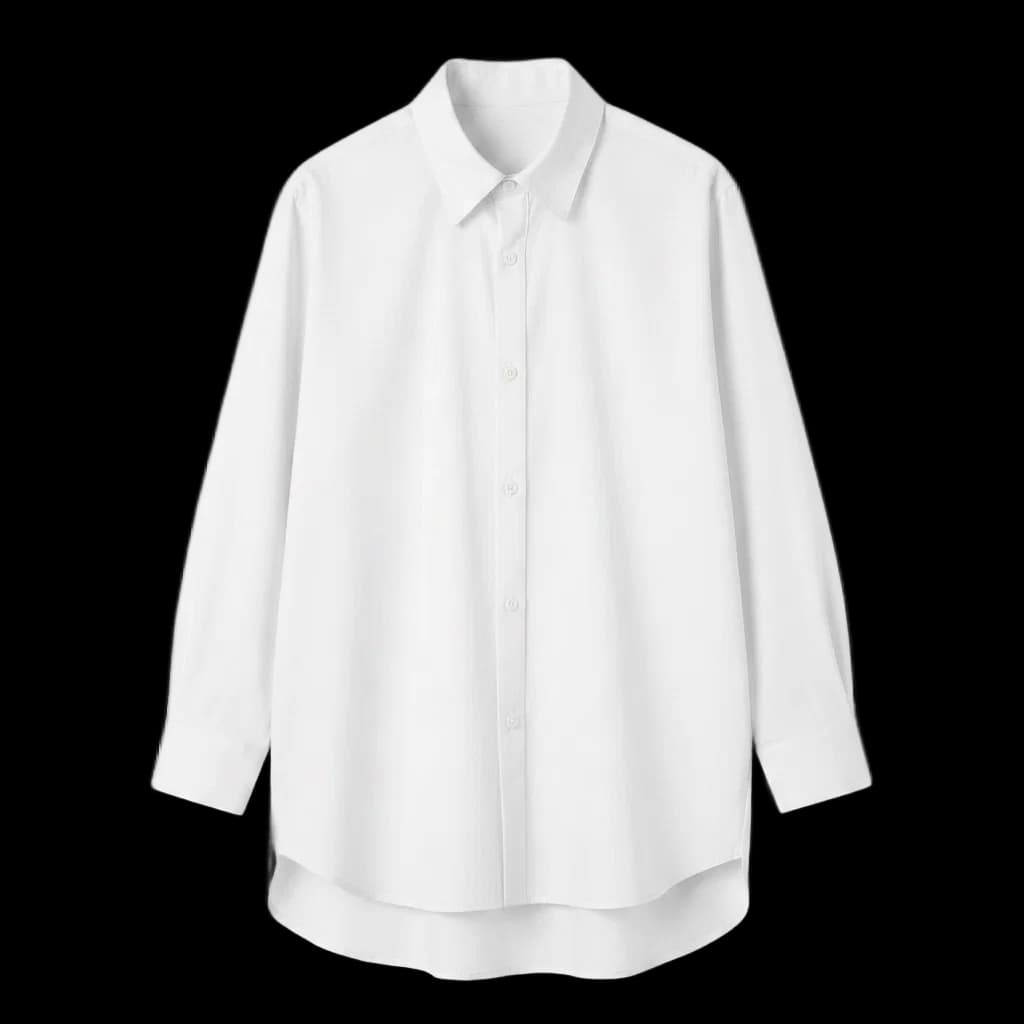
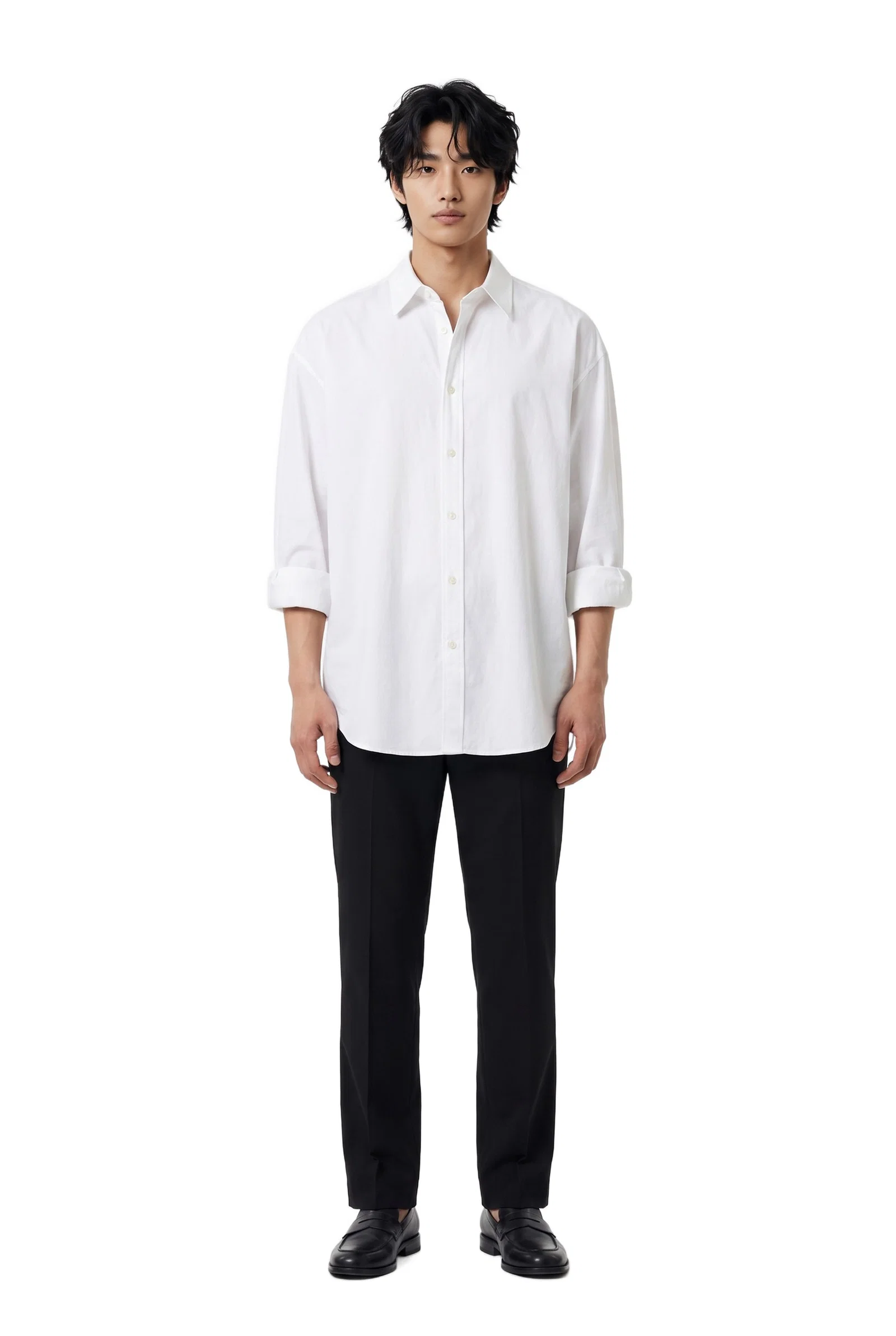
A boxy, longline button-down with a two-piece point collar and a concealed front placket that leaves only one button visible at the collar stand. Dropped shoulders and set-in sleeves fall into barrel cuffs, while the body hangs straight and relaxed. The curved hem runs longer at the back than the front.
Specs
GradePremium, Smooth Lyocell
Main Fabric100% Lyocell, 140gsm
interfacing100% Recycled Polyester
FitOversized
SilhouetteOversized button-down shirt
LengthLongline
NecklineTwo-piece point collar with collar stand
SleeveSet-in drop sleeve
HemCurved high-low hem, longer at back
ClosureHidden front button placket (fly front) with 1 visible button at collar stand. 7 hidden buttons down CF. 1 button per cuff, 1 button on sleeve placket.
CareMachine wash at 30°C on a delicate cycle, Do not bleach, Tumble dry on low heat
Minimum order50 units
Size guide
cm
XXS
XS
S
M
L
XL
XXL
Bust
57.5
60
62.5
65
67.5
70
72.5
Length
79
81
83
85
87
89
91
The garment measured flat: compare it with one you own.
There are approximately 2 billion poplin shirts produced every year.
They are worn in boardrooms, on beaches, under suits, over swimwear, tucked, untucked, ironed, and deliberately crumpled. The construction has not changed in 150 years. The fabric has not changed in 150 years. And yet a $15 poplin shirt and a $400 poplin shirt are completely different objects. The difference is not the design. It is the specification.
A poplin shirt costs between $18 and $75 per unit landed depending on fabric weight, dye method, finish, and factory region. An affordable solid-colour shirt from Bangladesh lands at approximately $18. A premium GOTS yarn-dyed stripe shirt from Turkey lands at approximately $38 — the stripe adds around $7 to the landed cost through yarn dye multiplier, pattern matching yardage, and CMT uplift. A luxury GOTS non-iron shirt with French seams from Portugal lands at approximately $73.
Poplin is a plain-weave cotton fabric with a fine horizontal rib created by using a slightly heavier weft yarn than warp. The result is a smooth, crisp fabric that takes dye evenly, holds structure well, and drapes cleanly. It is the primary shirting fabric in the world. In woven fabric terms, it is the cotton equivalent of jersey in the knit family — the standard, the baseline, the reference point from which all other shirting fabrics are measured.
Piece-dyed poplin is woven first and then dyed — the result is always a solid colour. Yarn-dyed poplin has the yarn dyed before weaving, which allows patterns to be woven into the fabric: stripes, checks, plaids, and ginghams. Yarn-dyed fabric carries a ×1.175 multiplier on the Sparkit Poplin Engine compared to piece-dyed. Stripes and checks also require a pattern matching consumption multiplier of ×1.15 on top — 15% more fabric is needed per shirt to align the pattern at seams and yokes.
Non-iron finish is a resin crosslinking treatment applied to the fabric that gives the shirt high crease resistance — it can be worn and even washed without ironing and retains a relatively crisp appearance. It is the highest-cost finish adder in the Sparkit Poplin Engine at $1.65 per metre. On a shirt using 1.60m of fabric, non-iron finish adds $2.64 to the unit cost. It is a significant consumer benefit that commands a retail premium.
Lightweight poplin at 90–120 GSM is the commercial standard for classic and slim-fit shirts — it has the right balance of structure and drape and is appropriate for year-round shirting. Ultra-light 70–90 GSM is for summer and beach-adjacent drops only. Midweight 120–150 GSM is appropriate for overshirts and structured shirt-dresses. Heavyweight 150–190 GSM suits workwear positioning only.
Standard MOQs for poplin shirts are 500 to 2,000 units in Bangladesh and 300 to 1,000 in China. Through the Sparkit network, MOQs start at 50 to 200 units depending on region. Yarn-dyed fabrics typically require a minimum fabric yardage purchase at the mill level — confirm with the factory whether the yarn-dyed fabric is held in stock or needs to be woven to order, as this affects both MOQ and lead time significantly.
Poplin shirts take 37 to 111 days from order to UK delivery. Turkey and Portugal are the fastest at 37 to 65 days total. China is 62 to 92 days. Bangladesh and India are 67 to 111 days. Yarn-dyed fabric orders add 3 to 6 weeks if the fabric needs to be woven to order — always confirm whether the factory has the yarn-dyed fabric in stock before committing to a production timeline.
Affordable: standard resin buttons. Premium: corozo buttons, the most commercially credible natural button material, with a distinctive surface pattern and good durability. Luxury: mother-of-pearl or horn buttons. Always specify stitch count per button, minimum 8 passes, and include a tug test in QC. Button failure is the most commonly reported shirt quality complaint in consumer reviews.
GOTS, Global Organic Textile Standard, is the most credible organic certification for cotton poplin shirts — it covers both organic farming and chemical-processing standards throughout the supply chain. The Sparkit Poplin Engine applies a ×1.23 multiplier for GOTS. At a lightweight premium base of $7.50/m, GOTS adds $1.73 per metre or approximately $2.77 per shirt on standard consumption.
French seams enclose all raw fabric edges inside a double-sewn seam — the interior of the shirt shows no exposed serging or raw edges, only a clean narrow seam. It is the mark of quality shirting construction and the standard at any price point above $150 retail. The Sparkit Poplin Engine applies a $3.00 per unit adder for French seams.
Hemp and nettle poplin are woven shirts made from bast fibres — hemp or stinging nettle — grown without irrigation, pesticides, or synthetic fertiliser. Both fibres carry a mid index of 1.35 in the Sparkit Poplin Engine. On a lightweight affordable base of $4.00/m, the effective fabric price is $5.40/m. On 1.60m consumption, that is $8.64 fabric cost versus $6.40 for conventional cotton — a $2.24 per unit premium that builds a compelling sustainability story.
CMT stands for Cut, Make, and Trim — the core labour cost covering cutting all panels, assembling the shirt, and attaching trims including buttons and labels. For a basic poplin shirt the Sparkit Engine locks mid-range CMT at $6.00 affordable, $8.50 premium, and $15.00 luxury. Complex constructions run $8.25, $12.00, and $22.00 respectively, with adders for pattern matching, garment dyeing, French seams, and French cuffs.

 Model
 Close-upFabric and finish