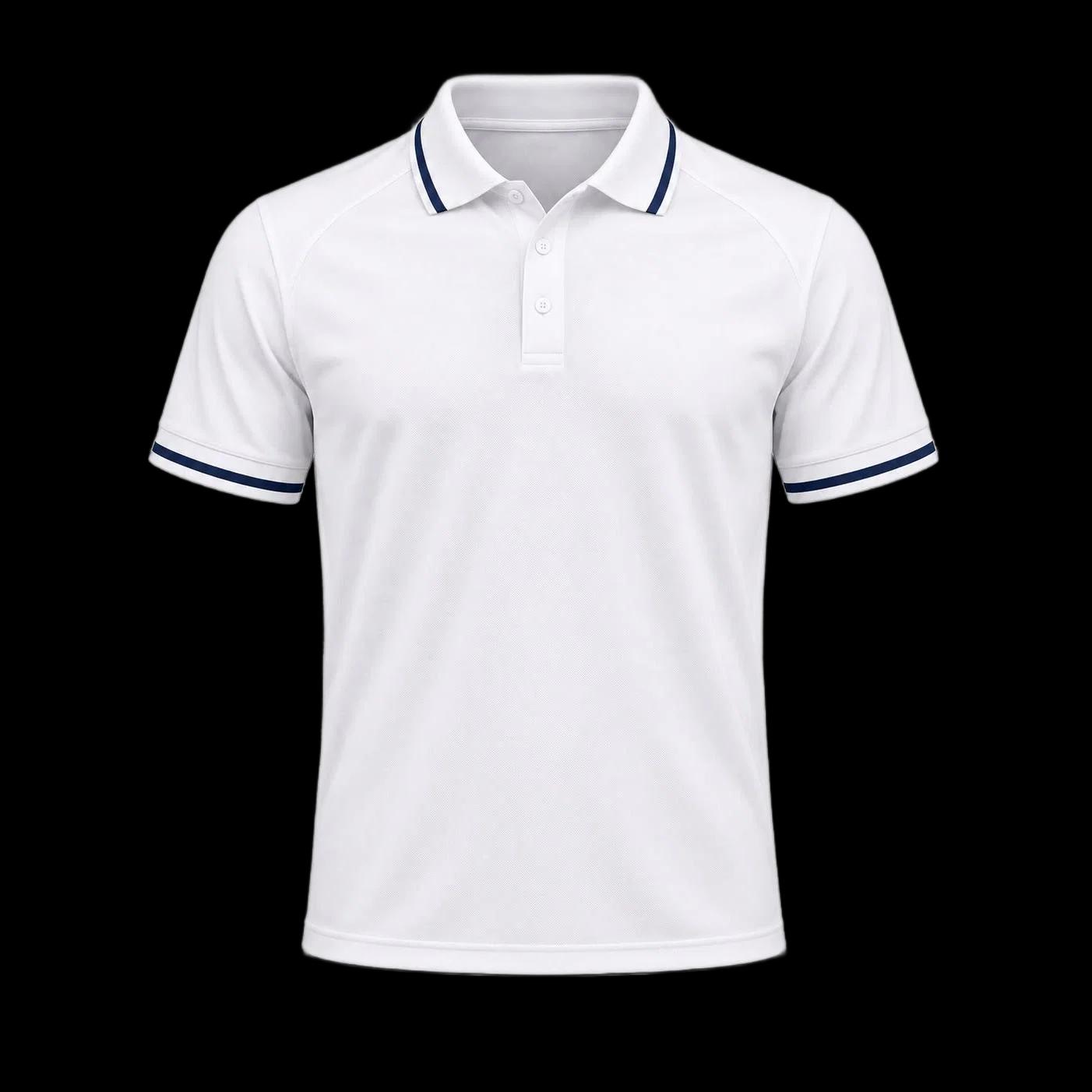
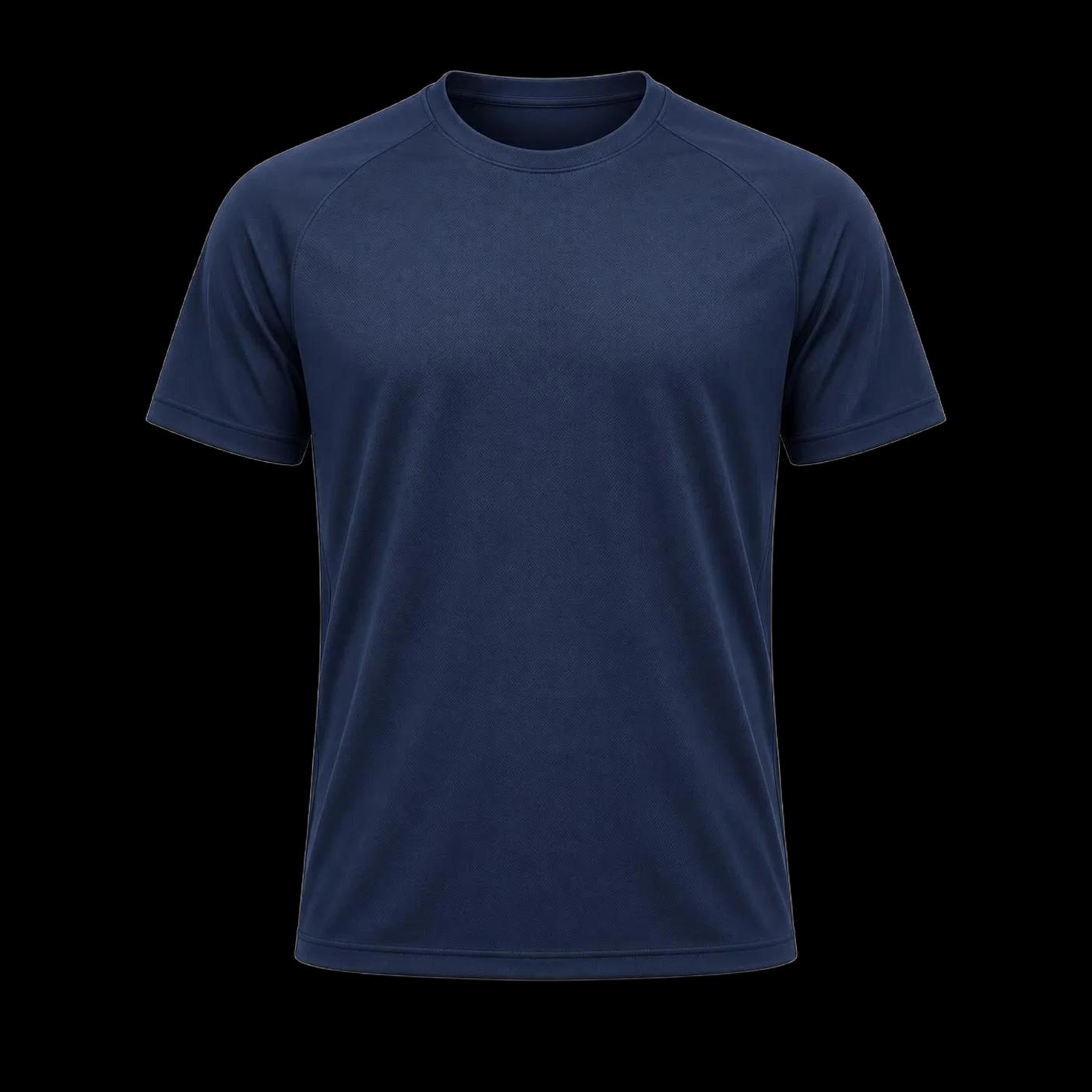
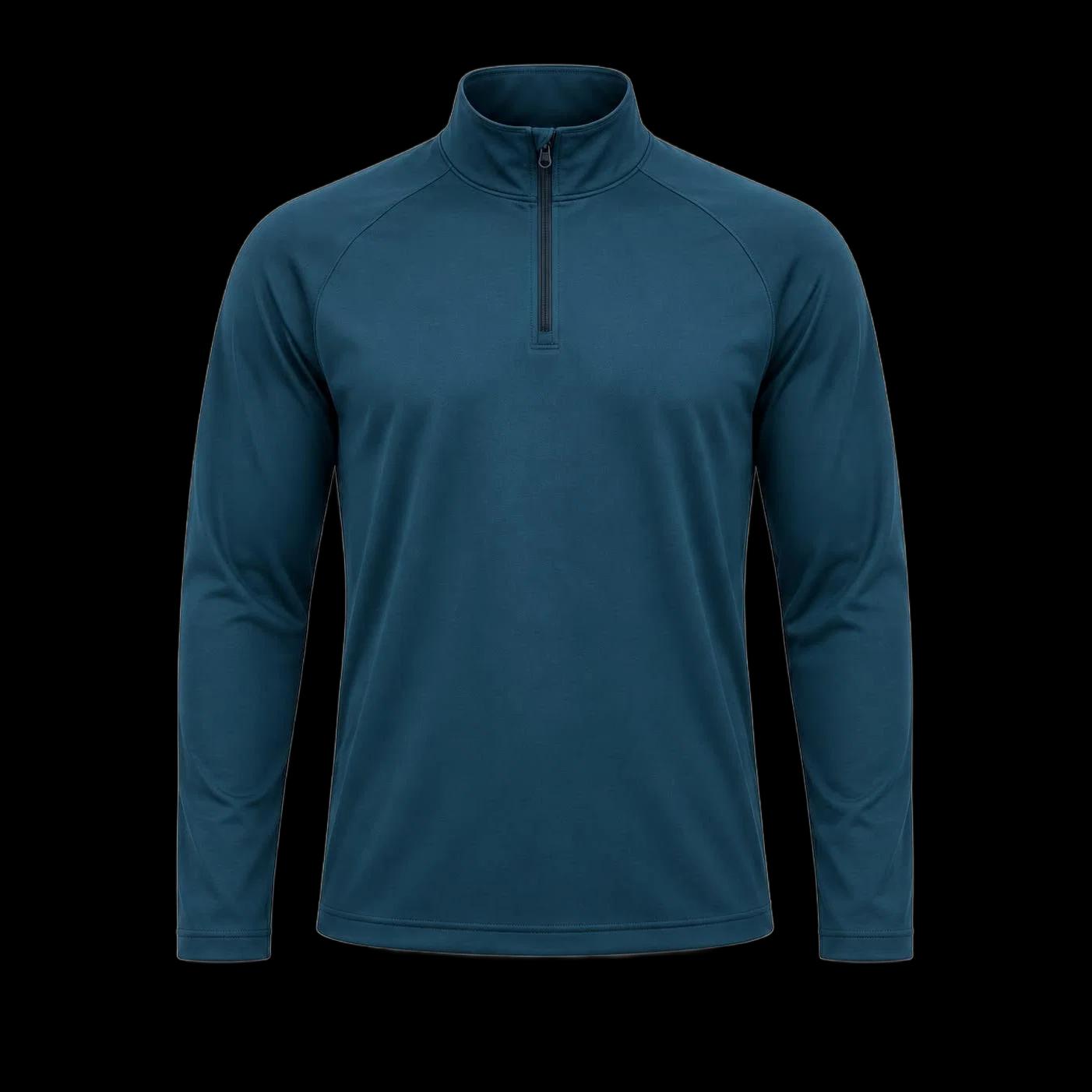
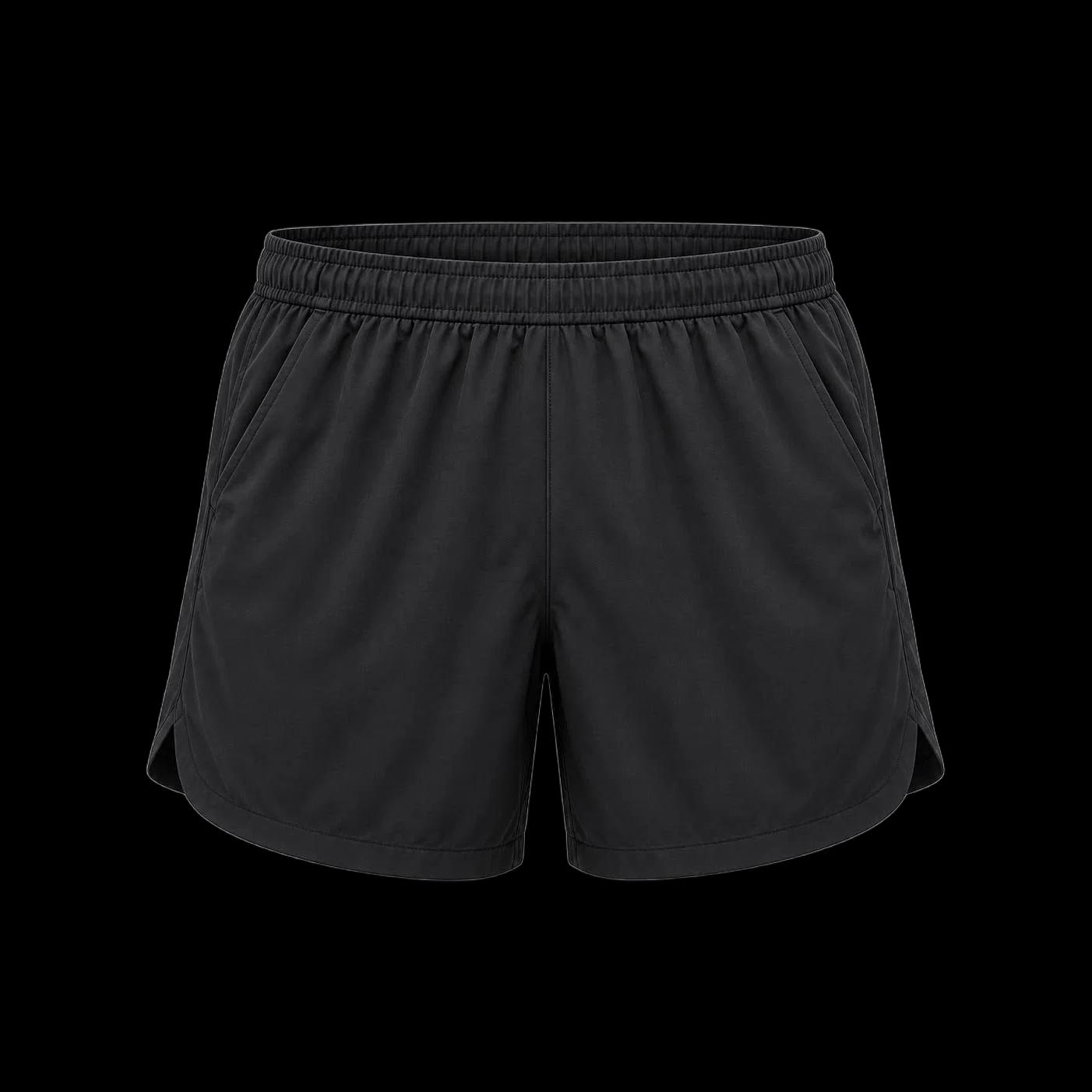
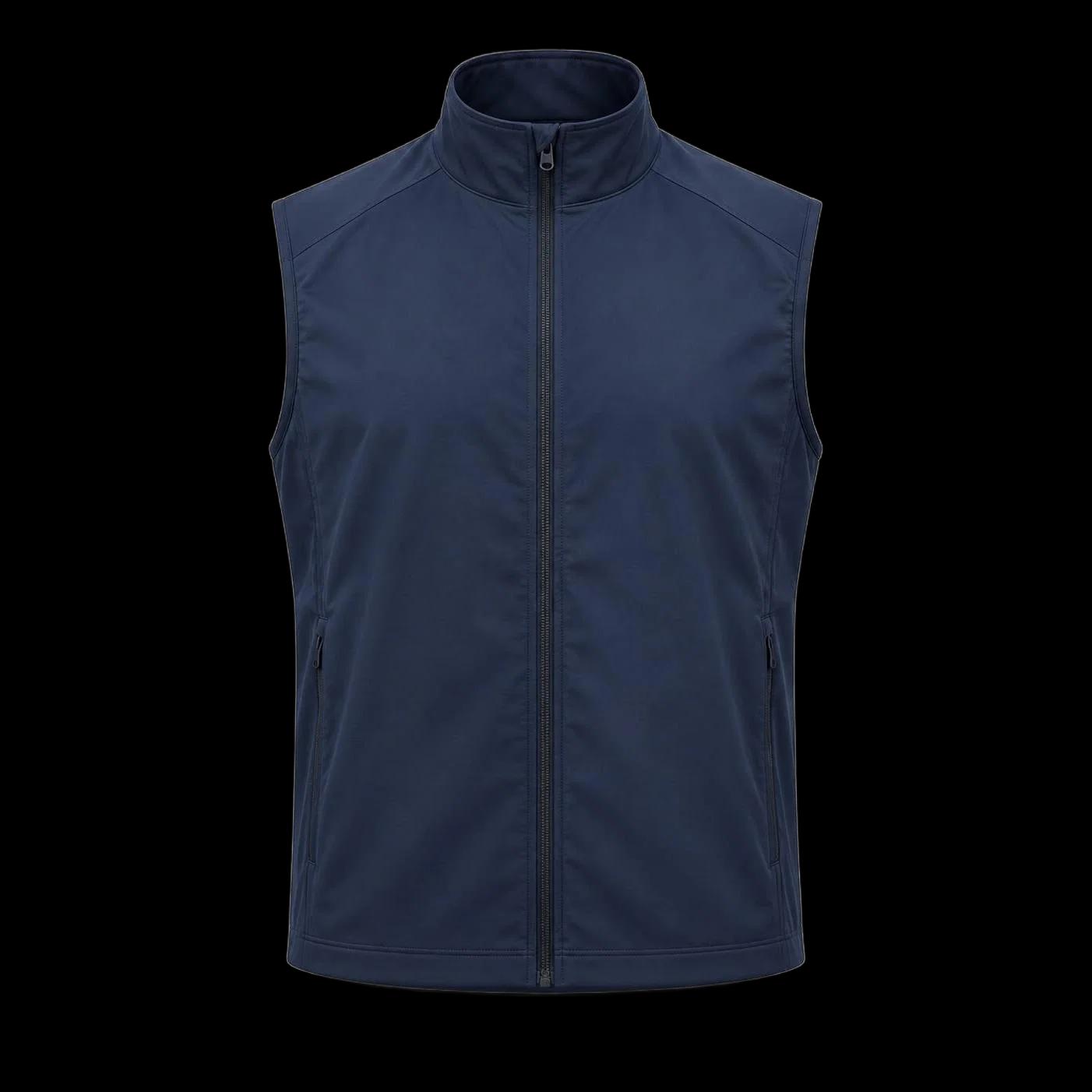
White Performance Polo, Premium grade (Premium Mesh Performance)
Made to order in White
Your size run, as set above
Replaced if anything arrives faulty
Shipping is priced at checkout from your address.
Make it yours
Your logo on the chest, a woven label, a back print, a colour from your brand book: Gabi designs the changes with you in the Studio and prices the finished piece before you order it. Your logo file goes on as you supply it.
Replaced if faultyMade to order, so no change-of-mind returns. Anything that arrives damaged or defective, we make right.
Try one firstOne unit in Premium, made like the run, through the same checkout.
Raglan seams run from the rib knit collar to the short sleeve cuffs, giving the shoulders a sloped line. The straight body falls to a regular length with a straight hem, closed by a three-button placket. Contrast navy tipping edges the collar and cuffs on the white mesh.
In 1926, René Lacoste — world number one tennis player, nicknamed The Crocodile — was frustrated with the long-sleeved button-down shirts players wore on court.
He designed a short-sleeved shirt in lightweight piqué cotton with a soft ribbed collar that stayed down. He called it a chemise. Everyone else called it a polo shirt. Today it is worth $8 billion a year. The crocodile logo is still on the chest.
A polo shirt costs between $15 and $70 per unit landed depending on fabric type, piqué structure, and factory region. An affordable PIQUE_COTTON solid polo from Bangladesh lands at approximately $15. A premium GOTS garment-dyed polo from Portugal lands at approximately $31. A luxury PIQUE_FINE_STRUCT merino blend polo from Italy lands at approximately $70. Polo shirts have lower landed costs than woven shirts at the same tier — primarily because fabric consumption is lower (0.90–1.10m vs 1.60m for a woven shirt) and CMT is simpler.
A polo shirt is a knit garment. Piqué — the fabric that defines the polo shirt — is produced on knitting machines, not weaving looms. The raised honeycomb or waffle texture of piqué is a knit structure formed by the loop formation process. This means polo shirts must go to a knit factory, not a woven shirt factory. This is the single most common routing error in polo shirt production.
Piqué is a weft-knit fabric that produces a raised, textured surface through a specialised knitting structure. The characteristic honeycomb or waffle texture is formed by the way yarn loops are formed and interlocked during knitting. The raised surface increases the fabric's total surface area, making it more breathable and more moisture-wicking than a flat jersey knit. The five Sparkit piqué material identifiers are: PIQUE_COTTON, PIQUE_STRETCH, PIQUE_FINE_STRUCT, PIQUE_DOUBLE, and PIQUE_PERFORMANCE.
The collar is the defining quality signal of a polo shirt — the detail that separates the polo from a T-shirt and determines whether the garment reads as quality or poor construction. A collar that curls, gaps, or loses its shape after washing signals poor manufacturing regardless of fabric cost. The collar must be cut on the correct grain, sewn with correct attachment tension, and finished with the correct rib weight. At luxury tier, woven poplin or self-piqué collars with soft interlining represent the highest specification.
PIQUE_COTTON is standard cotton with the classic honeycomb texture — breathable and versatile across casual to semi-formal contexts. PIQUE_PERFORMANCE is synthetic or blended (polyester, nylon) engineered for moisture management, quick drying, and shape retention under athletic use. Performance piqué is the standard for sport-focused polos and uses different dye chemistry (disperse dye) than cotton.
The Sparkit Engine supports four certification levels: conventional (×1.00), organic cotton non-GOTS (×1.15), GOTS (×1.23), and multiple certifications (×1.28). GOTS is the strongest organic certification for cotton piqué. For performance piqué, GRS (Global Recycled Standard) applies to recycled polyester. For merino blends, RWS (Responsible Wool Standard) is relevant. Always match certification to fibre type.
Standard MOQs range from 500–2,000 units in Bangladesh, 300–1,000 in China, and 100–300 in Portugal. Through the Sparkit network MOQs start at 50–100 units in Portugal and Italy, 100–200 in Turkey, 100–300 in China, and 200–400 in Bangladesh.
Polo shirts take 30 to 102 days from order to UK delivery. Portugal and Turkey are 30 to 57 days. China is 57 to 87 days. Bangladesh is 65 to 102 days. Italy is 38 to 65 days. Production is generally faster than woven shirts due to simpler construction.
Polo shirts use HS code 6105 for men's/unisex and 6106 for women's knit garments. This differs from woven shirts (6205/6206) and reflects correct classification as knitwear. Misclassification can affect duty rates.
Yes. Garment dyeing is common at premium tier, producing a washed, tonal finish. The Sparkit Engine applies $1.15 per unit plus 10–15% CMT uplift. Cotton piqué works well. Performance piqué generally does not due to different dye chemistry.
PIQUE_FINE_STRUCT includes birdseye and jacquard piqué — finer, denser knit structures with a more refined texture. Used by luxury brands like Loro Piana and Brunello Cucinelli. Benchmark: ~$12/m premium, ~$28/m luxury. Best for elevated polos and merino blends.
Standard logos use 500–1,500 stitches ($0.50–1.50/unit). Complex logos use 2,000–5,000 stitches ($1.50–3.00/unit). Always specify cutaway stabiliser — piqué fabric distorts under embroidery pressure. Reduce stitch density for fine piqué. Always test on production fabric before bulk.