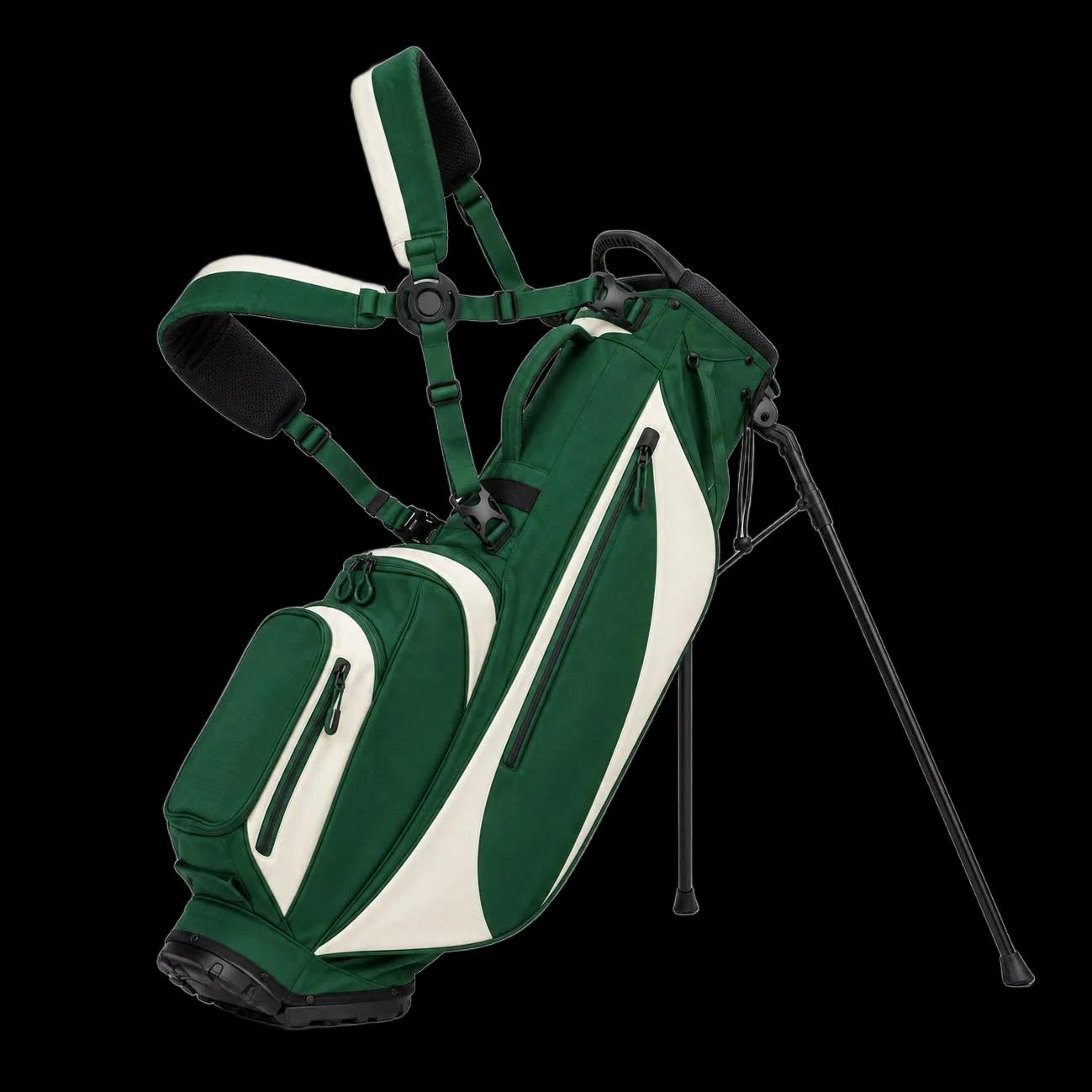
Golf Towel

Golf · Premium Cotton Waffle

Golf Towel, flat front
Flat front
GradePer unit at 100
ColourForest Green
QuantityUnder 50, a $30 development fee applies

Add 200 more to pay $5.50 / unit.

Customise

Gabi designs your changes in the Studio, then you order the finished piece. ORDER below makes it as shown.

Delivery
Lead time confirmed with your orderShipping is priced at checkout from your address.
Premium · Forest Green × 100$6.32 / unit
ShippingAt checkout
Total, before shipping$632
Get a team quote

What's included at $6.32

  • Golf Towel, Premium grade (Premium Cotton Waffle)
  • Made to order in Forest Green
  • Your size run, as set above
  • Replaced if anything arrives faulty

Shipping is priced at checkout from your address.

Make it yours

Your logo on the chest, a woven label, a back print, a colour from your brand book: Gabi designs the changes with you in the Studio and prices the finished piece before you order it. Your logo file goes on as you supply it.

Replaced if faultyMade to order, so no change-of-mind returns. Anything that arrives damaged or defective, we make right.
Try one firstOne unit in Premium, made like the run, through the same checkout.

A flat, single-panel rectangle that hangs folded from one top corner, where a metal carabiner passes through a grommet. The body is long and narrow relative to its width, with straight edges and rounded corners finished in contrast binding. A waffle-weave texture covers the dark green face.

Specs

GradePremium, Premium Cotton Waffle
Main Fabric100% Cotton, 350gsm
Edge Binding100% Cotton
SilhouetteRectangular towel
HemStraight with rounded corners
ClosureMetal carabiner through corner grommet
CareMachine wash at 30°C on a gentle cycle, Do not bleach, Tumble dry on low heat
Minimum order50 units
Encyclopedia

In 1848, a Scottish clergyman discovered that a chunk of tree sap, heated and hand-rolled, flew straighter and cheaper than a ball stuffed with boiled feathers.

The gutta-percha ball ended a 400-year-old industry overnight and made golf affordable for the first time. A century and a half later, the same instinct — better materials, tighter tolerances — put multi-layer urethane balls and forged titanium drivers into the bags of weekend players who will never break 90. Golf has always sold precision as much as it sells the game.

Read the story
Encyclopedia

The story of the Golf Towel

In 1848, a Scottish clergyman discovered that a chunk of tree sap, heated and hand-rolled, flew straighter and cheaper than a ball stuffed with boiled feathers. The gutta-percha ball ended a 400-year-old industry overnight and made golf affordable for the first time. A century and a half later, the same instinct — better materials, tighter tolerances — put multi-layer urethane balls and forged titanium drivers into the bags of weekend players who will never break 90. Golf has always sold precision as much as it sells the game.

300–500Regulation dimplesRange permitted under USGA/R&A conforming ball rules
1926Shaft material shiftSteel shafts legalized by the R&A, replacing hickory
CabrettaGlove materialSheepskin standard for grip and breathability in golf gloves

The Featherie Economy — and Its End

For nearly 400 years, golf balls were "featheries": a horsehide pouch stuffed with boiled goose feathers, hand-sewn while damp so it would shrink tight around the packed filling. A skilled maker produced perhaps four a day, and a single ball could cost as much as a golf club. In 1848, Reverend Robert Adams Paterson introduced the gutta-percha ball — moulded from the dried sap of the Malaysian sapodilla tree — which was cheaper, more durable, and, once players noticed that scuffed, nicked balls flew truer than smooth ones, the direct ancestor of the dimple.

The dimple pattern itself was formalized by the early 1900s once aerodynamicists established that a textured surface reduces drag by controlling the turbulent boundary layer around the ball in flight. Modern balls carry 300–500 dimples in patterns engineered and patented by manufacturers, with dimple depth measured in thousandths of an inch — differences invisible to the eye but regulated down to the millimeter by the USGA and R&A conforming ball list.

Shaft materials tell a parallel story: hickory wood dominated until the 1930s, when steel shafts were legalized and standardized the game feel across manufacturers. Graphite composite shafts arrived in the 1970s, cutting weight and letting clubmakers redistribute mass into the clubhead. Titanium driver heads followed in the 1990s, allowing larger, thinner-walled clubfaces than steel could support at a swingable weight — the technical shift behind the "bigger driver" era.

Leather goods remain the category other technical layer: golf gloves are almost universally cut from cabretta — a fine-grained sheepskin prized for its combination of grip, breathability, and break-in speed compared to cowhide. Bag and headcover leather-look materials have shifted heavily toward PU and coated canvas for cost and water resistance, while genuine leather persists at the premium end for cart bags and travel covers.

Questions

A standard 3-ball sleeve in two-piece construction (China, 500-unit run) lands around $2–3.50; premium multi-layer urethane-cover balls matching tour-level spin characteristics run $5–8 per sleeve landed, largely driven by the urethane cover cost and tighter compression tolerances.

100 × Premium · Forest Green

$632

SHOPPING BAG

(0 items)