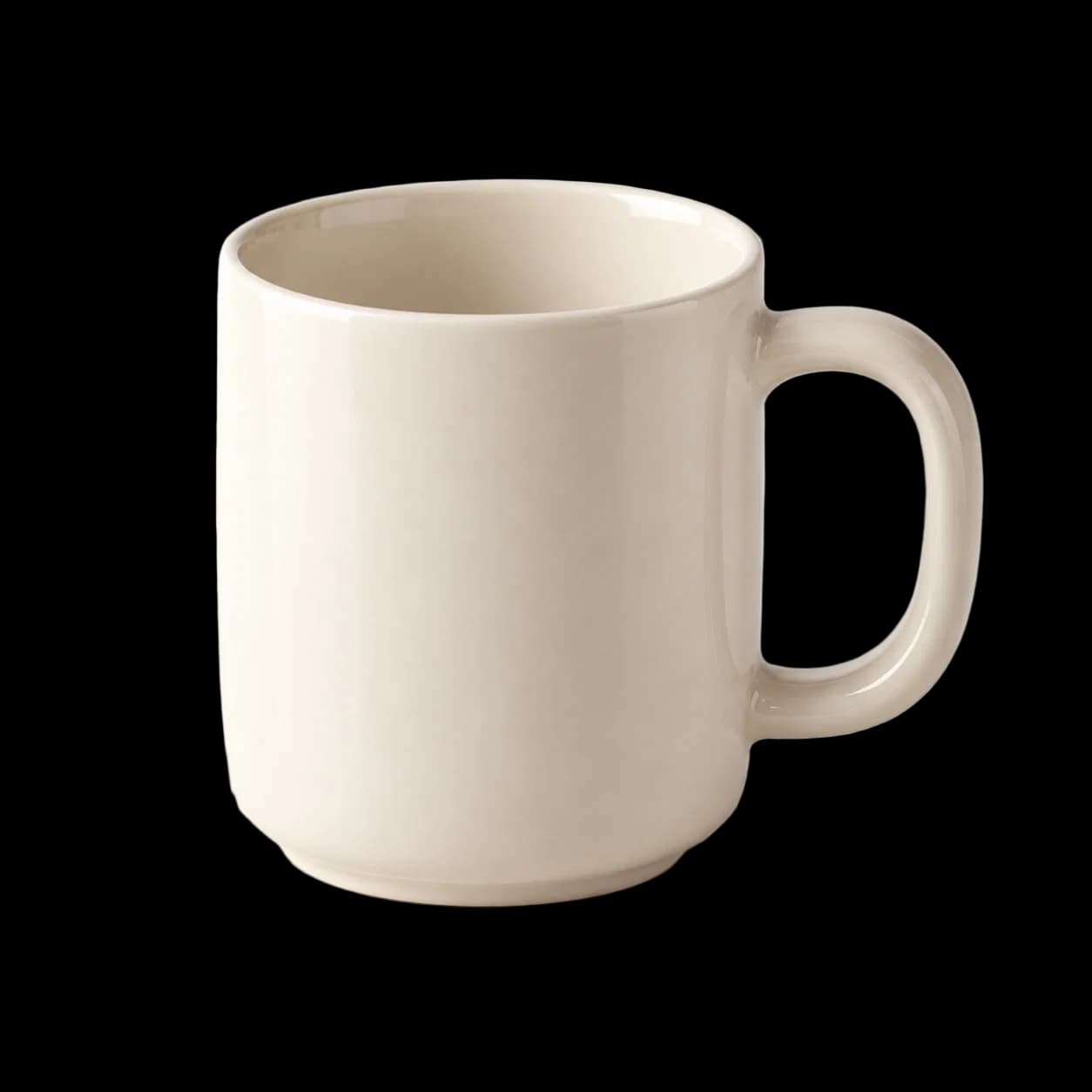
Ceramic Mug

Drinkware

Ceramic Mug, flat front
Flat front

This style is priced with your design. Start it with Gabi and you get the price before you order.

Replaced if faultyMade to order, so no change-of-mind returns. Anything that arrives damaged or defective, we make right.

The body rises as a straight-sided cylinder with a smooth, rounded rim and a flat base that carries a slight bevel. A single curved handle attaches to one side, forming an open loop that projects outward from the wall. The mug is glazed in a pale cream tone.

Specs

Main Fabric100% Ceramic, 800gsm
SilhouetteCylindrical
NecklineSmooth rim
HemFlat base with slight bevel
Minimum order50 units
Encyclopedia

In 18th-century England, what you drank tea from marked exactly where you stood socially: fine porcelain cup and saucer for polite company, a plain earthenware mug with no saucer at all for everyday and working-class use.

Josiah Wedgwood and the other Staffordshire potters mass-produced both side by side, and the split survives almost unchanged today — a cup and saucer still signals a slower, more formal occasion, while a mug is what actually sits on a desk.

Read the story
Encyclopedia

The story of the Ceramic Mug

In 18th-century England, what you drank tea from marked exactly where you stood socially: fine porcelain cup and saucer for polite company, a plain earthenware mug with no saucer at all for everyday and working-class use. Josiah Wedgwood and the other Staffordshire potters mass-produced both side by side, and the split survives almost unchanged today — a cup and saucer still signals a slower, more formal occasion, while a mug is what actually sits on a desk.

18th century EnglandCup-and-saucer vs. mug divideStaffordshire potteries mass-produced formal porcelain cup-and-saucer sets alongside plain earthenware mugs for everyday use
Insulating air gapDouble-wall glass functionTwo glass layers trap air between them, keeping a hot drink's cup cool to hold while remaining visible
20th-century convenienceTea infuser additionA built-in strainer basket lets loose-leaf tea steep directly in the mug without a separate pot

A Class Divide in Clay

Staffordshire potteries mass-produced formal porcelain cup-and-saucer sets alongside plain earthenware mugs, a divide that still shapes how the two formats are perceived today.

Double-wall glass construction creates an insulating air gap between two glass layers, letting a cup hold a hot drink without becoming too hot to hold while still showing the drink's color.

Tea infuser mugs build a strainer basket directly into the cup, letting loose-leaf tea steep without a separate pot or strainer — a 20th-century convenience addition to the basic mug format.

Ceramic is thicker and more heat-retentive; porcelain is thinner and reads as more formal; glass shows the drink but conducts heat faster, requiring double-wall construction to stay comfortable to hold when hot.

Questions

Ceramic mugs fall under HS 6912; glass drinkware falls under HS 7013. Confirm per SKU, since ceramic and glass are classified under entirely different chapters.

SHOPPING BAG

(0 items)