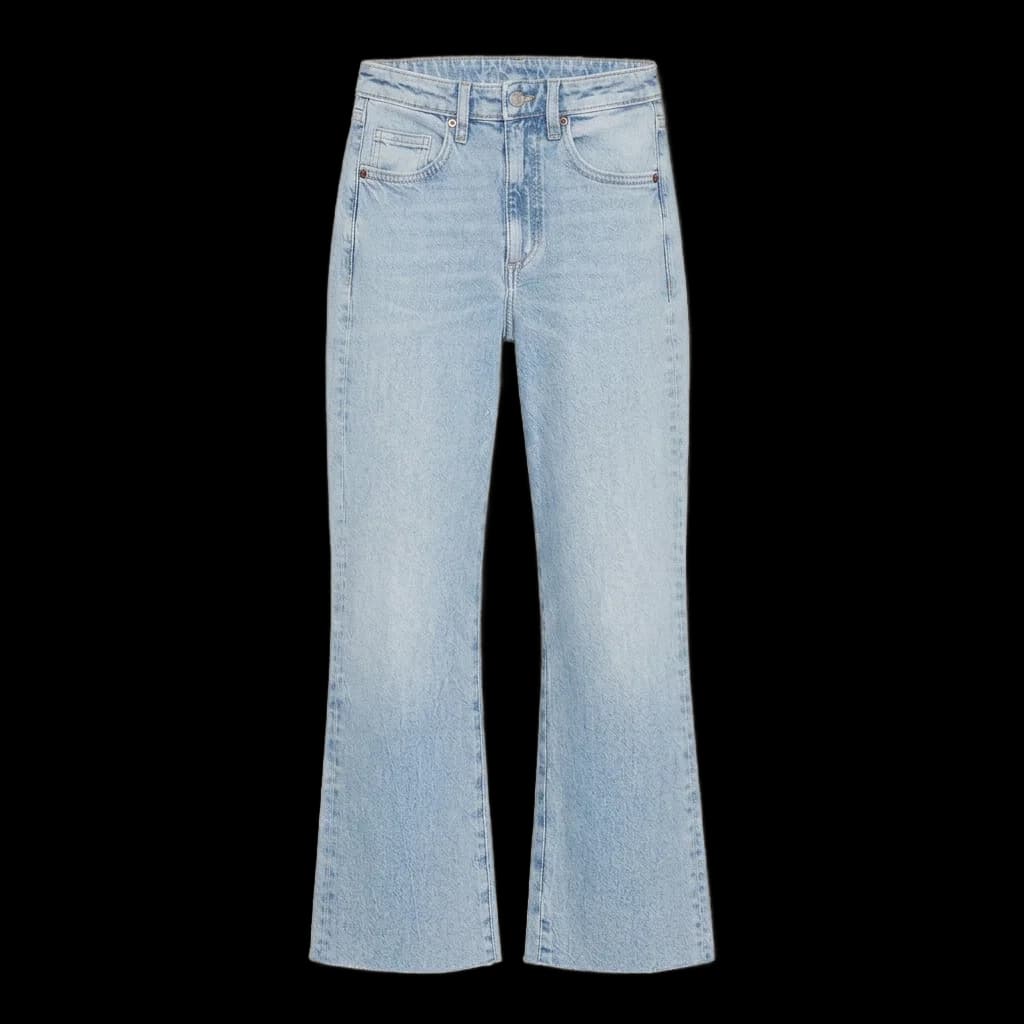
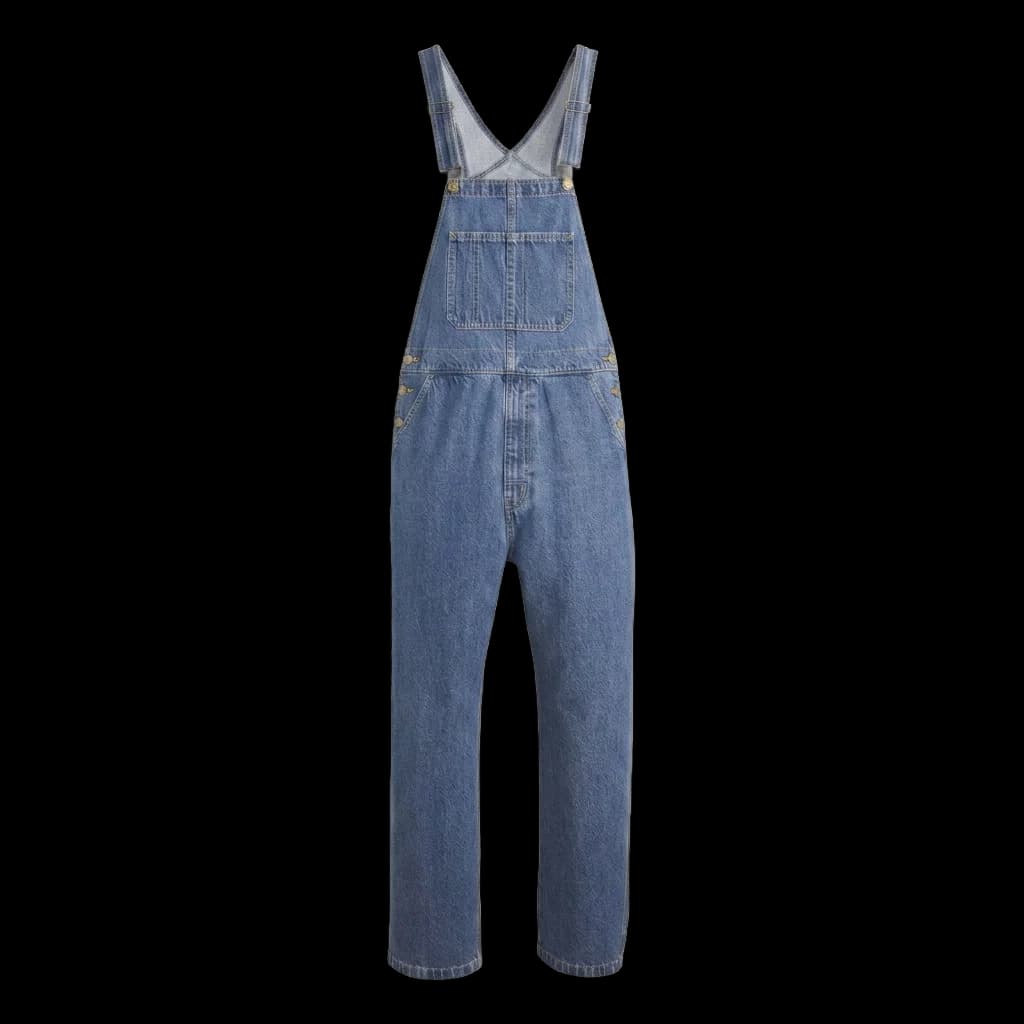
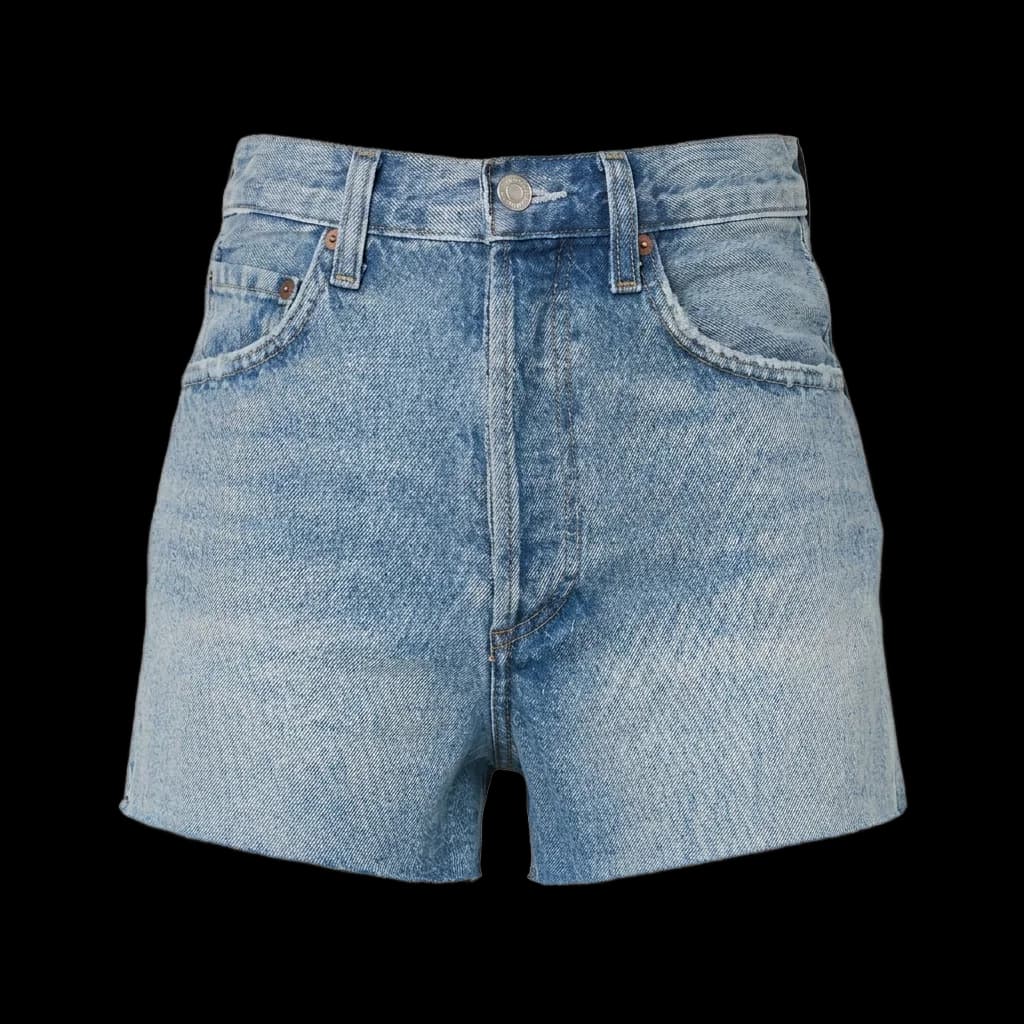
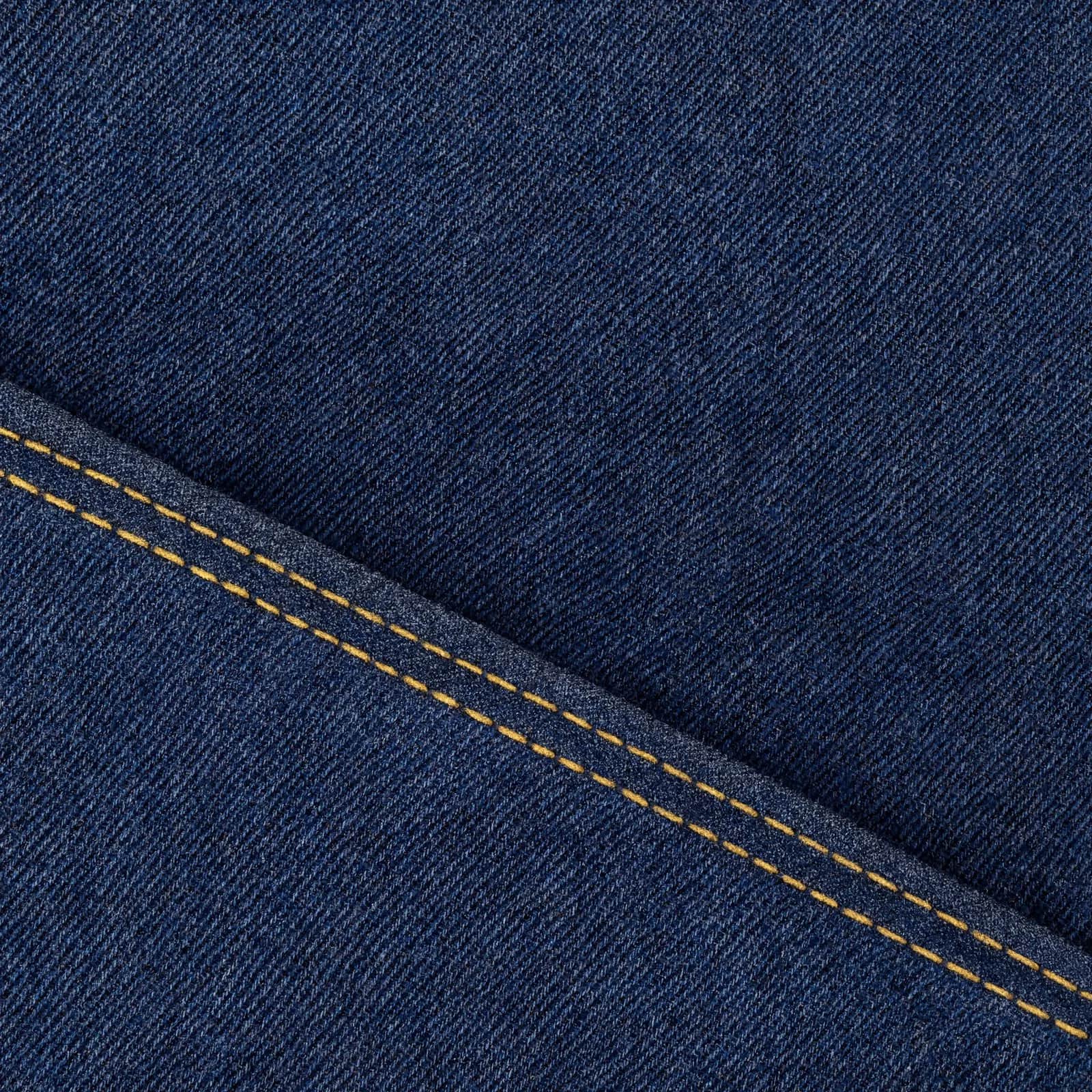
Your logo on the chest, a woven label, a back print, a colour from your brand book: Gabi designs the changes with you in the Studio and prices the finished piece before you order it. Your logo file goes on as you supply it.
Close-upFabric and finish
Replaced if faultyMade to order, so no change-of-mind returns. Anything that arrives damaged or defective, we make right.
Try one firstOne unit in Premium, made like the run, through the same checkout.
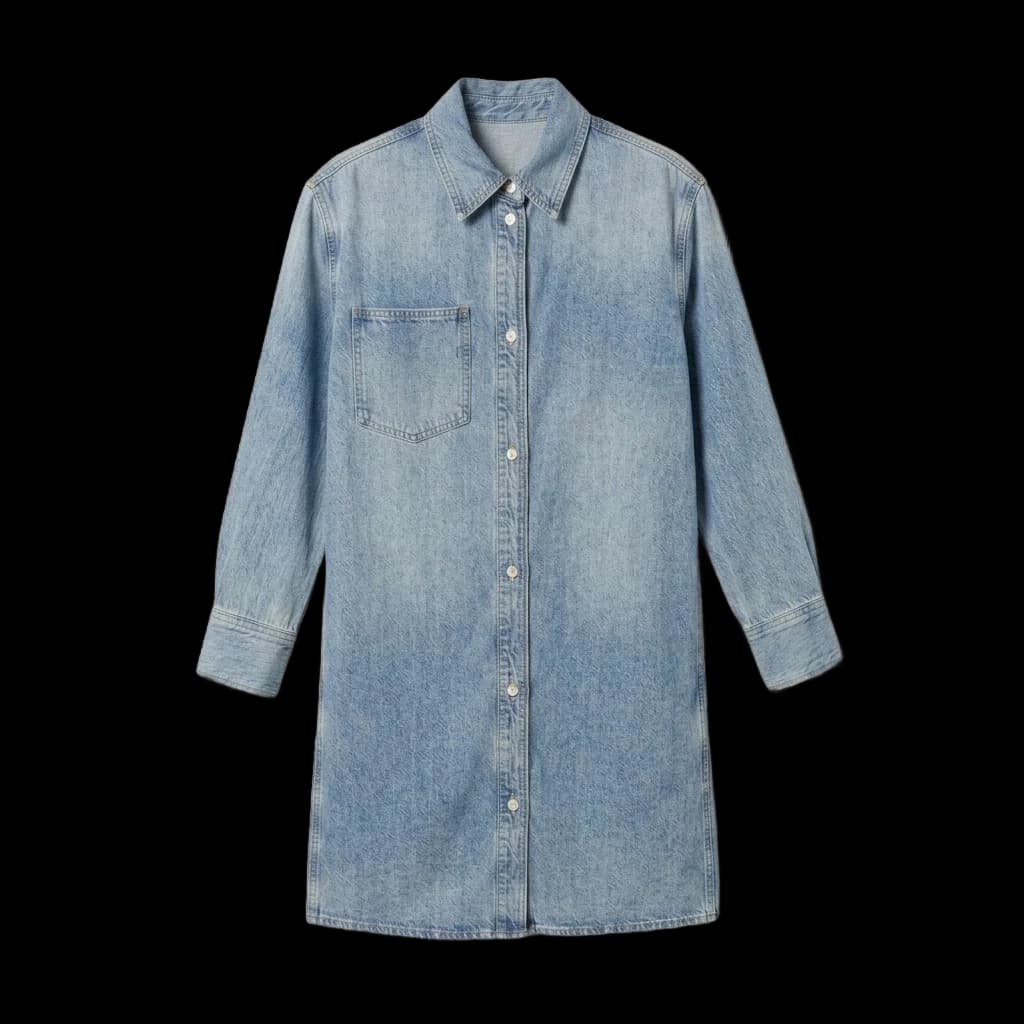
A boxy, longline button-up with a two-piece pointed collar on a stand and a seven-button center placket. Drop shoulders sit roughly eight centimetres out from the body, feeding into long set-in sleeves that end in single-button barrel cuffs with plackets. The curved shirt-tail hem drops lower at the front and back, and a back yoke panel crosses the upper shoulders.
Specs
GradePremium, Cotton Denim
Main Fabric100% Cotton, 300gsm
FitOversized
SilhouetteOversized button-up shirt
LengthLongline
NecklineTwo-piece pointed collar with collar stand
SleeveSet-in drop sleeve
HemCurved shirt-tail hem
Closure7-button center front placket, 1 button on collar stand, 1 button per cuff. Metal tack buttons assumed.
CareMachine wash at 30°C on a gentle cycle, Wash separately for the first few washes — the finish may transfer, Do not bleach
Minimum order50 units
Size guide
cm
XXS
XS
S
M
L
XL
XXL
Bust
54.5
57
59.5
62
64.5
67
69.5
Length
72
74
76
78
80
82
84
The garment measured flat: compare it with one you own.
The denim shirt is the most underestimated garment in the denim family.
It uses the lightest fabric. It has the most construction complexity. It works as a shirt, a jacket, and a layer simultaneously. Levi's made it iconic. Ralph Lauren made it expensive. And now every brand from H&M to Loro Piana has one. The blueprint is the same. The only variable is what it's made of.
A denim shirt costs between $27 and $57 per unit landed. An affordable classic shirt in lightweight denim from China with enzyme wash lands at approximately $27. A premium GOTS organic overshirt from Turkey with stone wash lands at around $57. Despite lower CMT than a jacket, the denim shirt has high fabric cost relative to CMT due to its 1.95m consumption — the highest in the denim family.
Lightweight denim at 6–9 oz (200–300 GSM) is the standard for classic shirts and chambray styles — softer, more breathable, and easier to construct with collar and cuff precision. Midweight denim (10–12 oz) is appropriate for overshirts and shackets where more structure is required. Heavyweight denim should never be used for shirts.
A denim shirt is worn as a shirt — tucked or untucked, with collar, cuffs, and standard shirt construction. An overshirt, or shacket, is a longer, more relaxed garment worn open over a T-shirt as a lightweight jacket substitute. Overshirts use midweight denim for structure, have a simpler construction, often with no structured cuff or collar stand, and command a higher retail price due to outerwear positioning. CMT difference: shirt $7.50 affordable vs overshirt $10.00 affordable.
A denim shirt uses 1.95m of fabric at size M — the highest consumption in the denim family — because it requires fabric for the full body front and back, two long sleeves with plackets, collar, collar stand, cuffs, and two chest pockets. This makes fabric cost the primary cost driver in denim shirts rather than CMT as in simpler garments.
MOQs for denim shirts are 300 to 1,000 units at standard factories. Through the Sparkit network they start at 50 to 150 units. Denim shirts can be combined on a cutting run with other lightweight denim items at the same factory, reducing per-unit costs across all styles.
Denim shirts take 38 to 97 days from order to UK delivery. Portugal is 38 to 65 days. Turkey is 40 to 62 days. China is 67 to 97 days. Shirt construction is more time-consuming than jeans or shorts due to the collar, cuff, and placket complexity, so factor an additional 3 to 5 days into production timelines relative to bottoms at the same factory.
Affordable: standard resin or plastic buttons. Premium: corozo buttons, which are the most sustainable natural button material and signal quality. Luxury: mother-of-pearl or horn buttons. For Western shirts, pearl snap closures are the authentic hardware choice. Specify button attachment and a pull-test in QC for all button types.
A Western denim shirt adds pointed yoke pieces at front and back, pearl snap closures instead of sewn buttons, and often piping at yoke seams and pocket edges. The pointed yoke requires more precise pattern cutting and seaming. Pearl snaps replace standard buttons but add $0.80–$1.50 per shirt in hardware cost. CMT is approximately 15–20% higher than a standard shirt.
Enzyme wash at roughly $1.50–$3.00 per unit is the most appropriate wash for lightweight denim shirts because it softens the fabric and reduces stiffness without significant fading, which suits a cleaner button-down aesthetic. Stone wash is appropriate for a more casual or vintage overshirt aesthetic. Raw or dark wash suits fashion-forward positioning where structured, indigo-rich fabric is the statement.
Yes, and this is strongly recommended. A classic shirt and an overshirt can use different fabric weights but often share the same wash house and sometimes the same factory cutting run. A combined order reduces per-unit sampling costs and helps negotiate better fabric pricing across the two yardage requirements.
The Sparkit Denim Engine locks overshirt CMT at $10.00 affordable, $14.50 premium, and $28.50 luxury. This is higher than a classic shirt at $7.50, $11.00, and $20.00 because overshirts typically have more pockets, heavier construction, and sometimes additional details such as a patch back yoke or interior features. The overshirt's higher retail positioning makes the CMT premium commercially justifiable.
Denim shirts use HS code 6205 for men's and unisex woven shirts or 6206 for women's woven shirts. Use 6205 for unisex and men's styles. Use 6206 for women's-specific constructions. Overshirts that function as outerwear may classify under 6201 or 6202, so confirm with your customs broker before production.

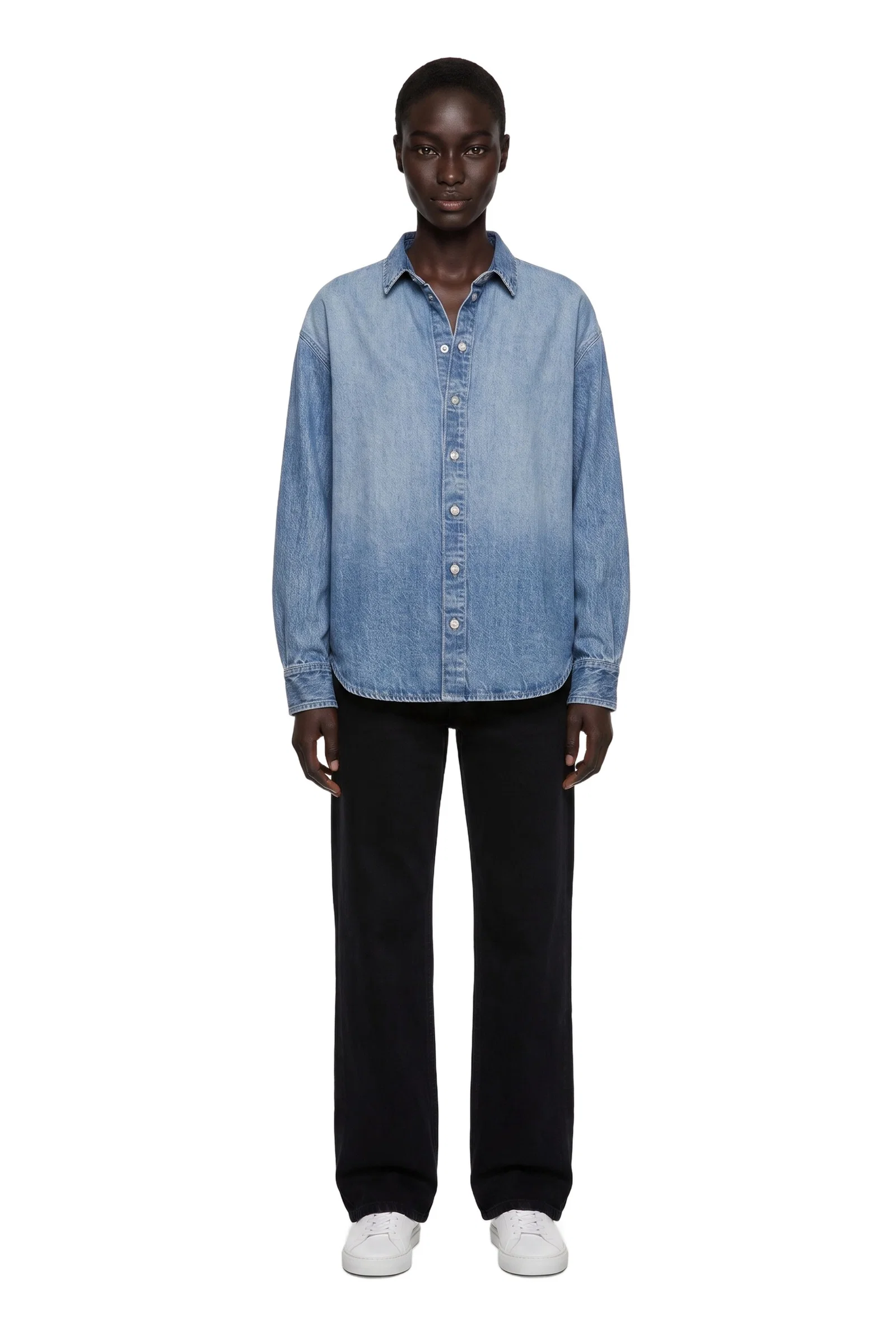 Model
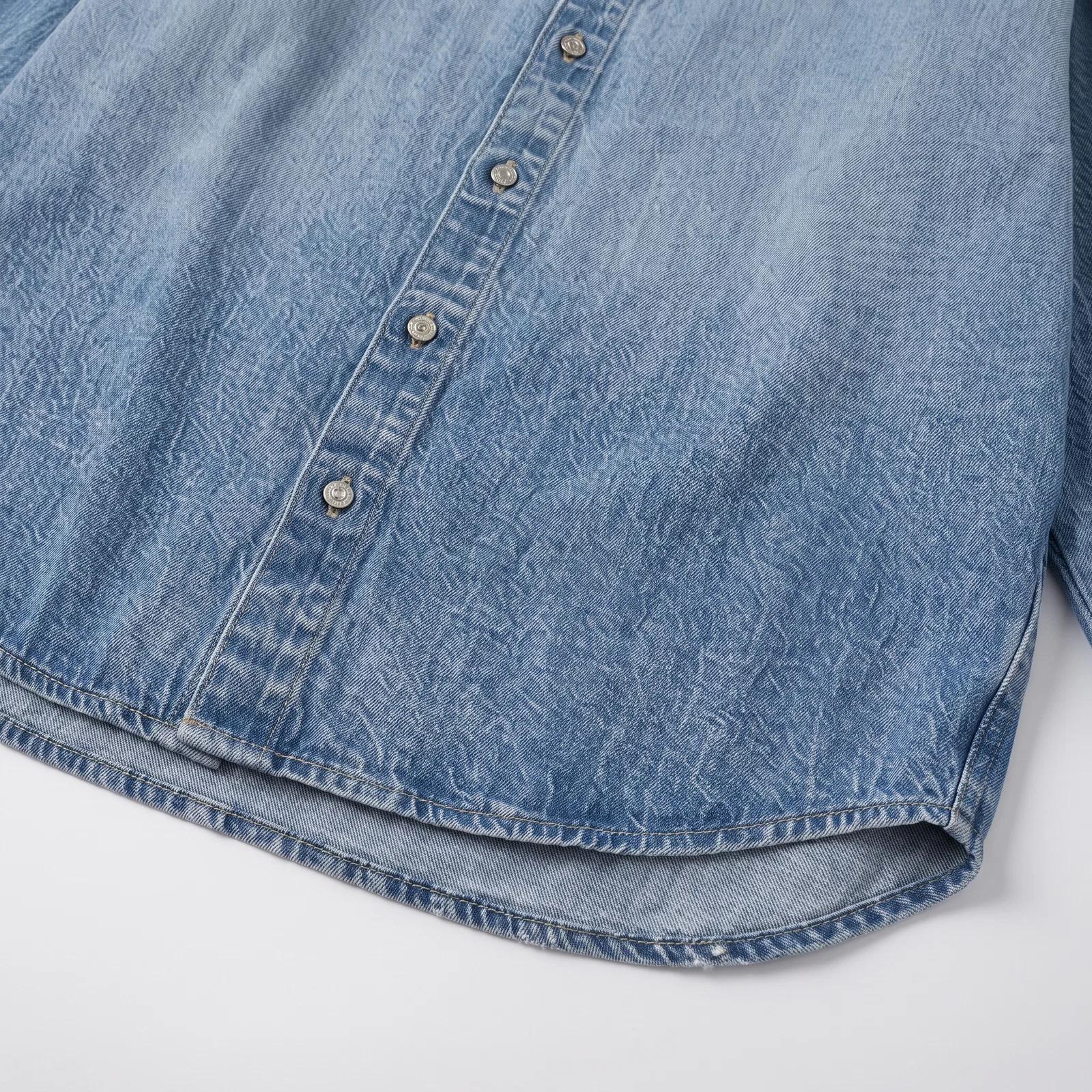 Close-upFabric and finish