Tea Strainer

Coffee, Tea & Bar Accessories · Refined Stainless Steel
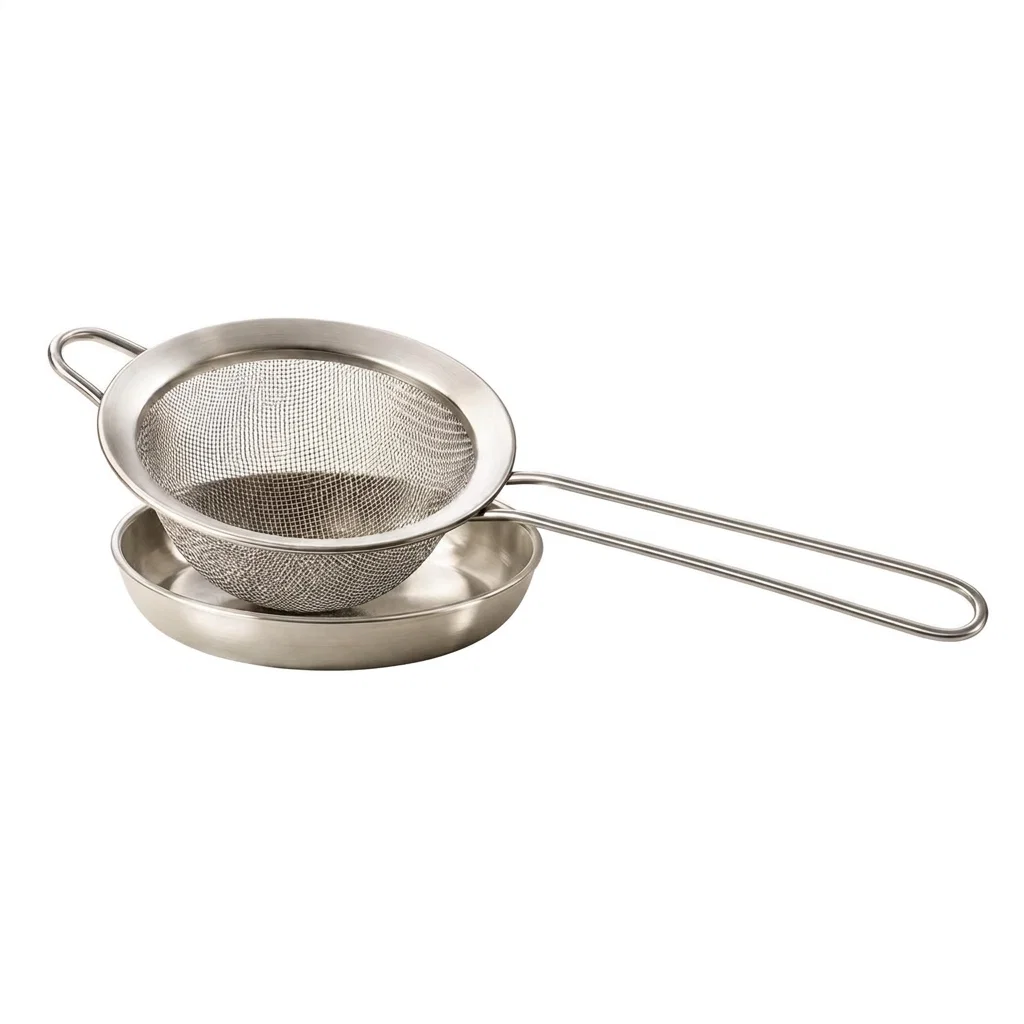
Tea Strainer, flat front
Flat front
GradePer unit at 100
ColourSilver
QuantityUnder 50, a $30 development fee applies

Add 200 more to pay $5.75 / unit.

Customise

Gabi designs your changes in the Studio, then you order the finished piece. ORDER below makes it as shown.

Delivery
Lead time confirmed with your orderShipping is priced at checkout from your address.
Premium · Silver × 100$6.61 / unit
ShippingAt checkout
Total, before shipping$661
Get a team quote

What's included at $6.61

  • Tea Strainer, Premium grade (Refined Stainless Steel)
  • Made to order in Silver
  • Your size run, as set above
  • Replaced if anything arrives faulty

Shipping is priced at checkout from your address.

Make it yours

Your logo on the chest, a woven label, a back print, a colour from your brand book: Gabi designs the changes with you in the Studio and prices the finished piece before you order it. Your logo file goes on as you supply it.

Replaced if faultyMade to order, so no change-of-mind returns. Anything that arrives damaged or defective, we make right.
Try one firstOne unit in Premium, made like the run, through the same checkout.

A shallow, circular mesh basket sits inside a wider, low-sided drip bowl, both in polished stainless steel. A long wire handle extends from the basket rim as a narrow, elongated loop, while a smaller loop projects from the opposite side. The bowl is broader than the basket and rests flat beneath it.

Specs

GradePremium, Refined Stainless Steel
Main Fabric100% Stainless Steel, 300gsm
Minimum order50 units
Encyclopedia

Victorian tea service treated the strainer as seriously as the teapot itself — a silver tea strainer with its own matching drip bowl was a standard fixture of a proper table, not an afterthought tool.

The airtight coffee canister sitting next to it in a kitchen today solves a completely different, much more recently understood problem: coffee begins losing aroma compounds to oxidation within minutes of grinding, a fact that only became a marketed selling point once specialty coffee culture made freshness a competitive claim in the 1990s and 2000s.

Read the story
Encyclopedia

The story of the Tea Strainer

Victorian tea service treated the strainer as seriously as the teapot itself — a silver tea strainer with its own matching drip bowl was a standard fixture of a proper table, not an afterthought tool. The airtight coffee canister sitting next to it in a kitchen today solves a completely different, much more recently understood problem: coffee begins losing aroma compounds to oxidation within minutes of grinding, a fact that only became a marketed selling point once specialty coffee culture made freshness a competitive claim in the 1990s and 2000s.

18th–19th centuryVictorian tea strainer statusA silver tea strainer with a matching drip bowl was a standard fixture of formal English tea service
Minutes after grindingCoffee oxidation timelineGround coffee begins losing aroma compounds to oxidation almost immediately, the reason airtight storage matters
Releases CO2, blocks airOne-way valve functionLets built-up gas escape from fresh-roasted beans without letting outside oxygen in

A Silver Strainer and a Modern Freshness Problem

Victorian tea service treated the strainer as a formal table object, while coffee freshness as a marketed spec is a much more recent development.

Airtight canisters use a rubber or silicone gasket seal, sometimes with a one-way valve that lets built-up CO2 escape from fresh-roasted beans without letting outside air in — a feature that matters more for whole-bean storage than pre-ground coffee.

A coffee scoop calibrated to a standard tablespoon-equivalent volume addresses one of the most common causes of poorly brewed coffee at a consumer level: inconsistent scooping.

Tea strainer mesh size determines how much fine tea dust passes through versus gets caught, a genuine functional difference between a cheap coarse strainer and a fine one suited to delicate loose-leaf teas.

Questions

An airtight coffee canister with a one-way valve (China, 300–500 unit run) lands around $4–8; a basic coffee scoop runs $0.80–1.50; a tea strainer runs $1.50–3 depending on mesh material.

100 × Premium · Silver

$661

SHOPPING BAG

(0 items)