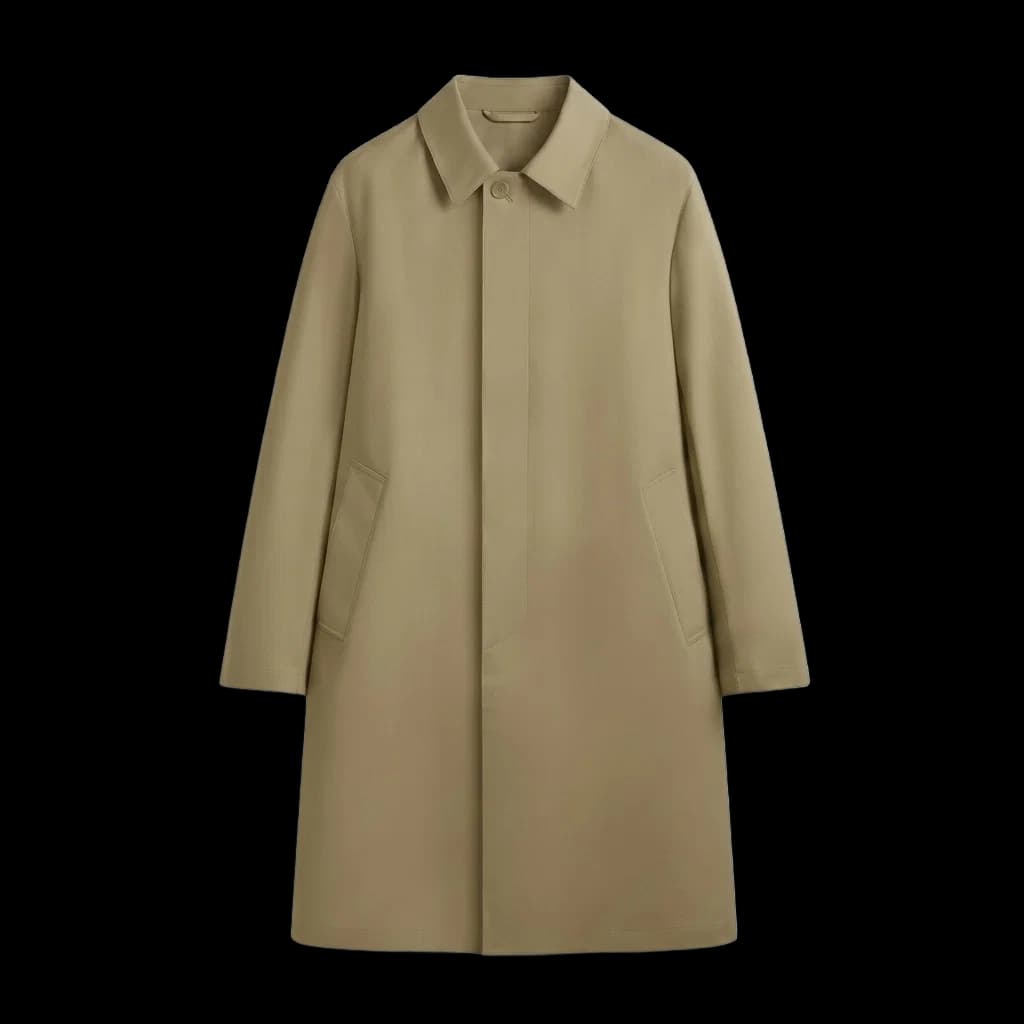
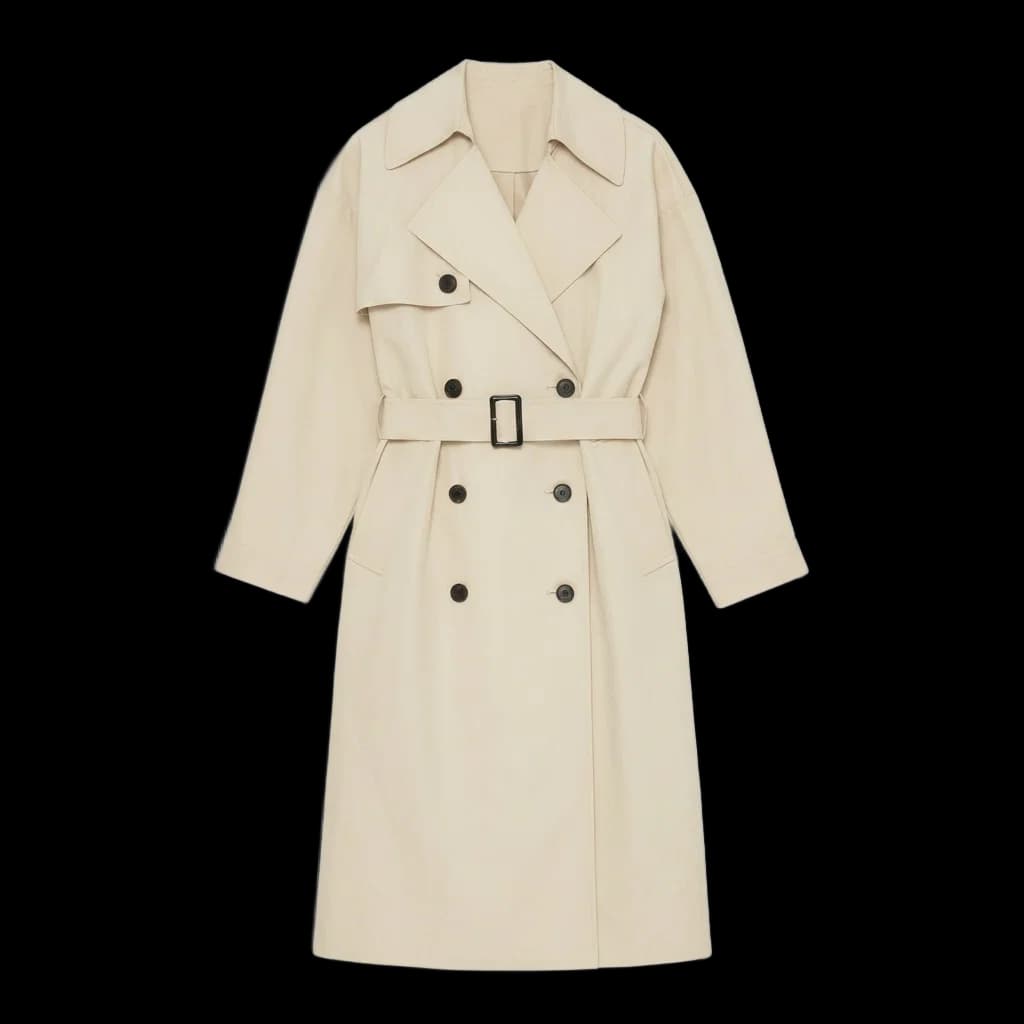
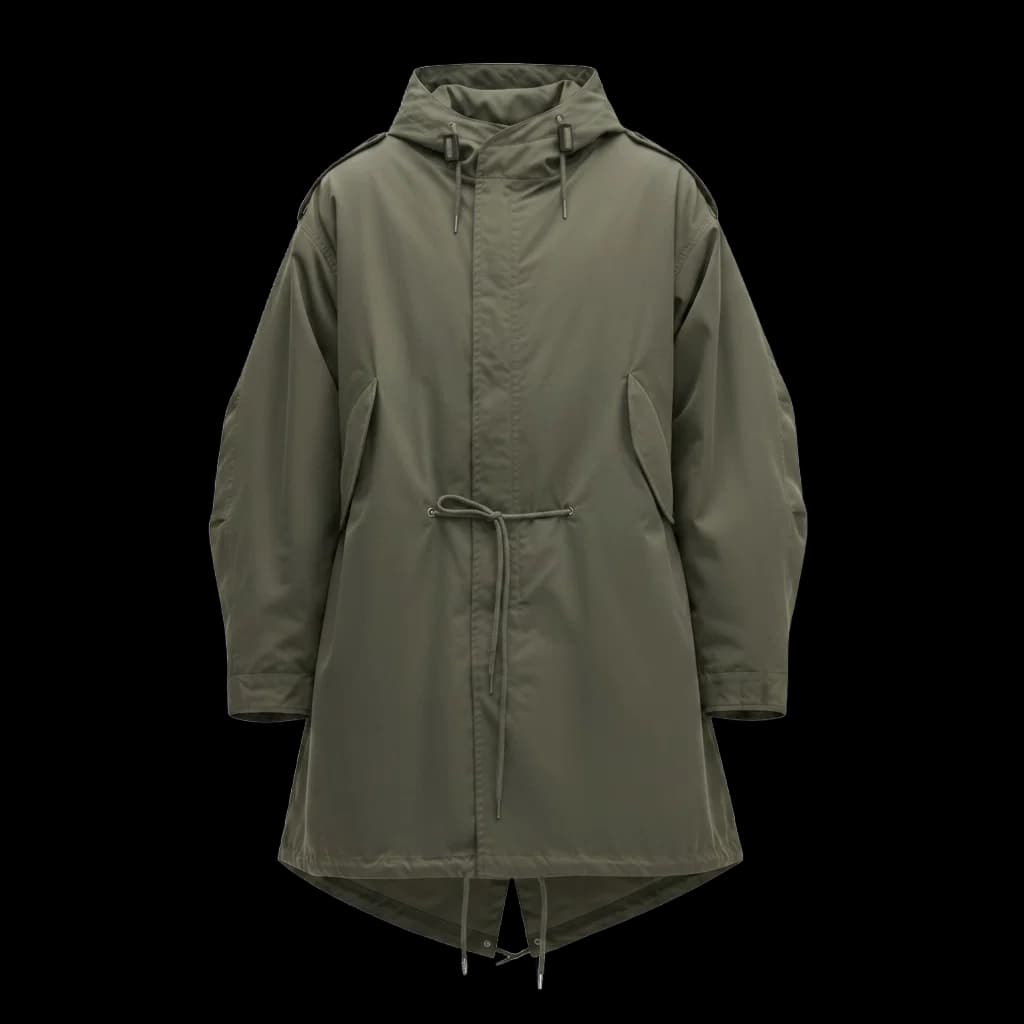
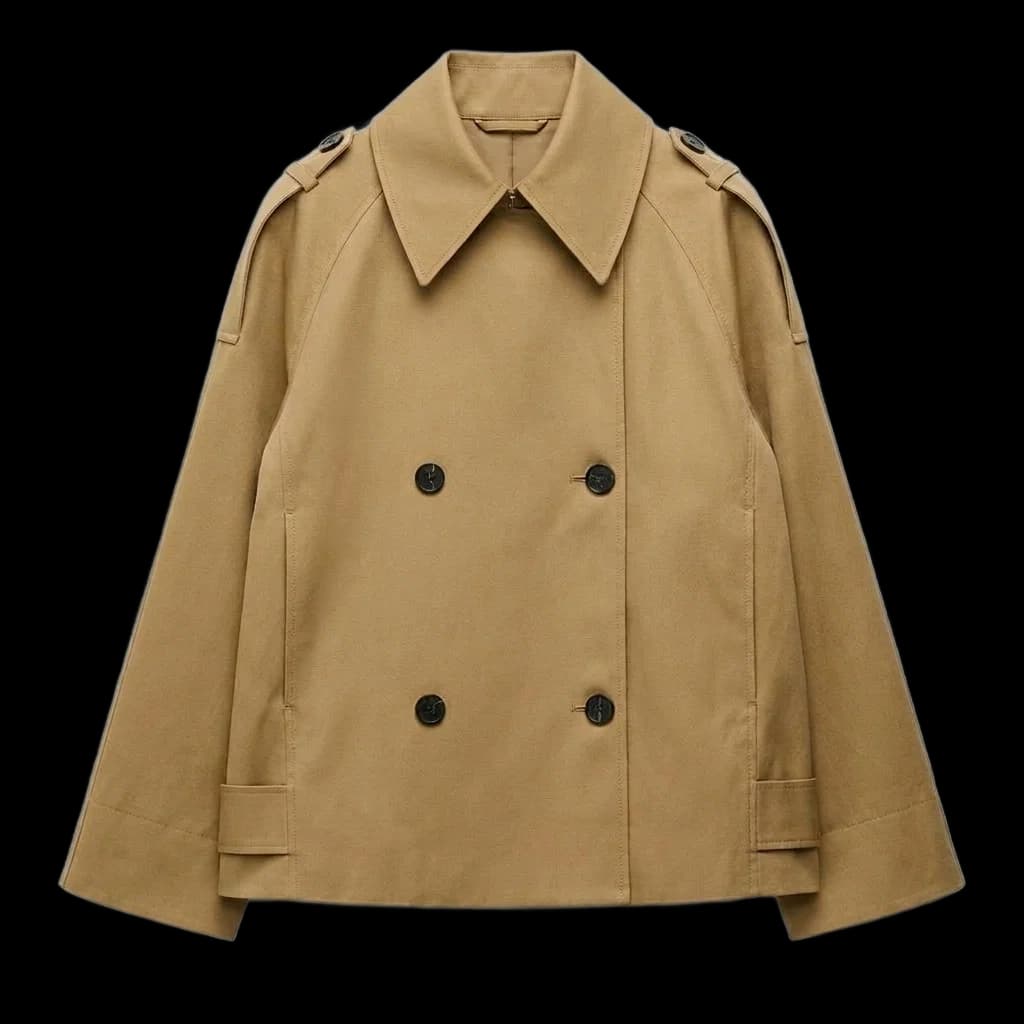
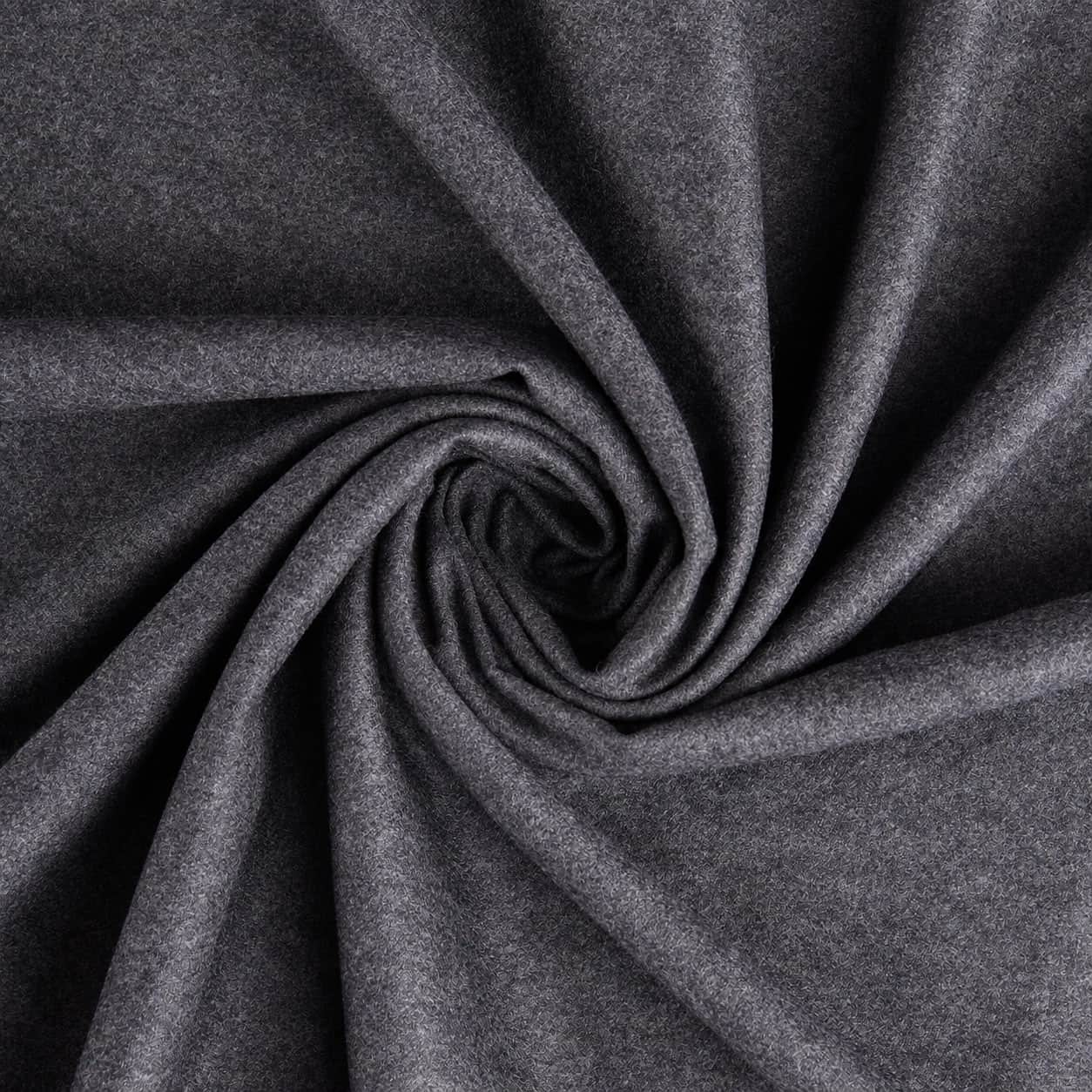
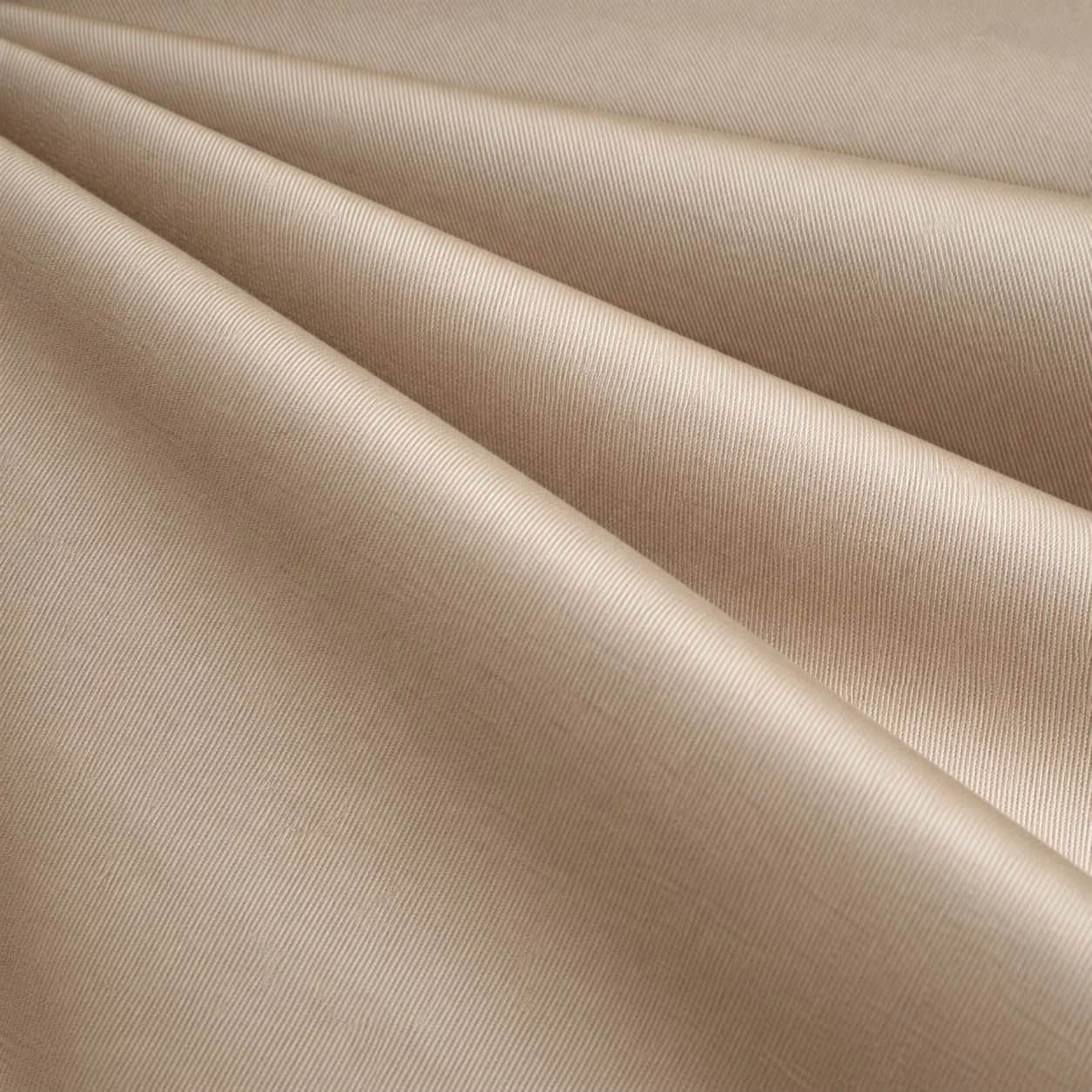
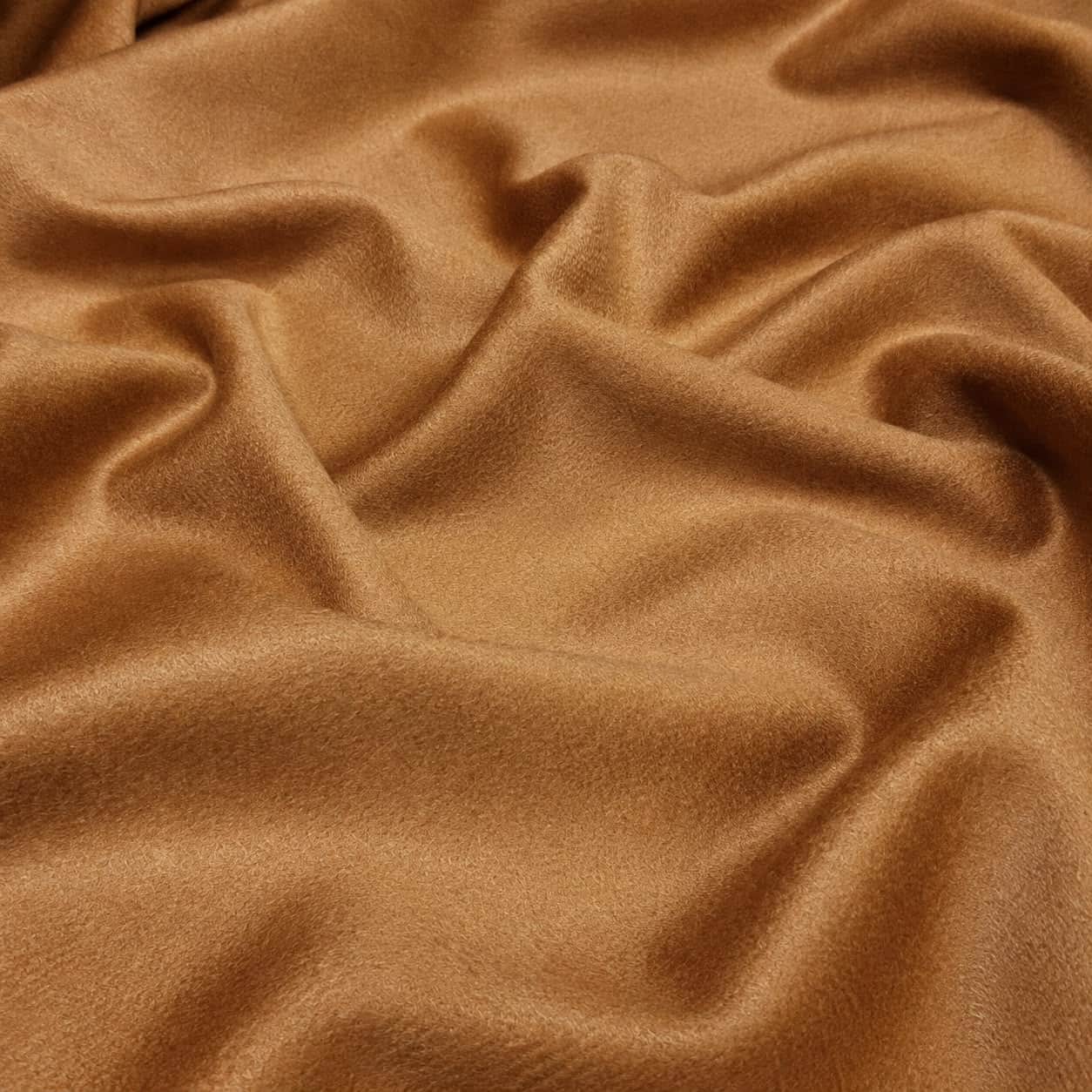
Your logo on the chest, a woven label, a back print, a colour from your brand book: Gabi designs the changes with you in the Studio and prices the finished piece before you order it. Your logo file goes on as you supply it.
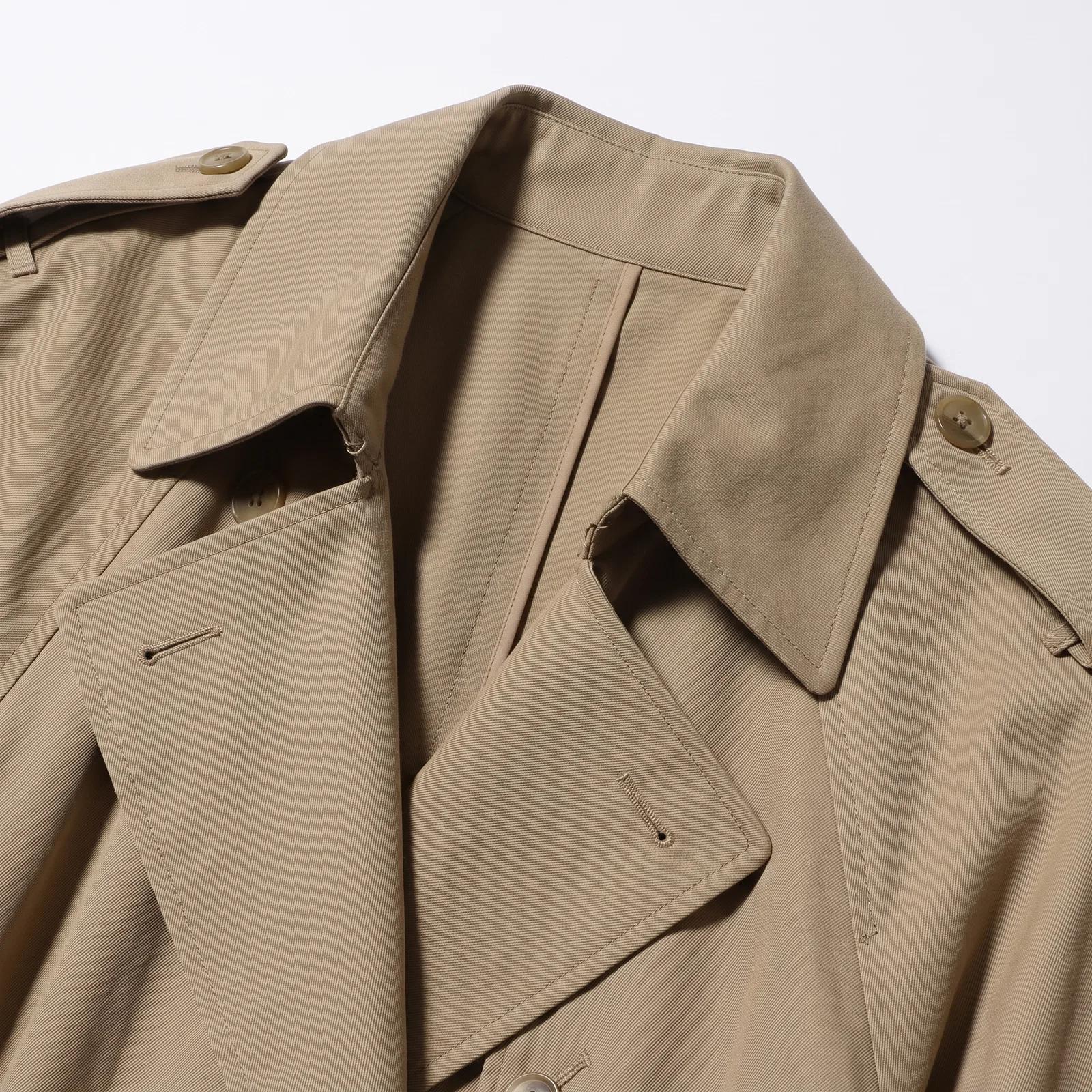
Close-upFabric and finish
Replaced if faultyMade to order, so no change-of-mind returns. Anything that arrives damaged or defective, we make right.
Try one firstOne unit in Premium, made like the run, through the same checkout.
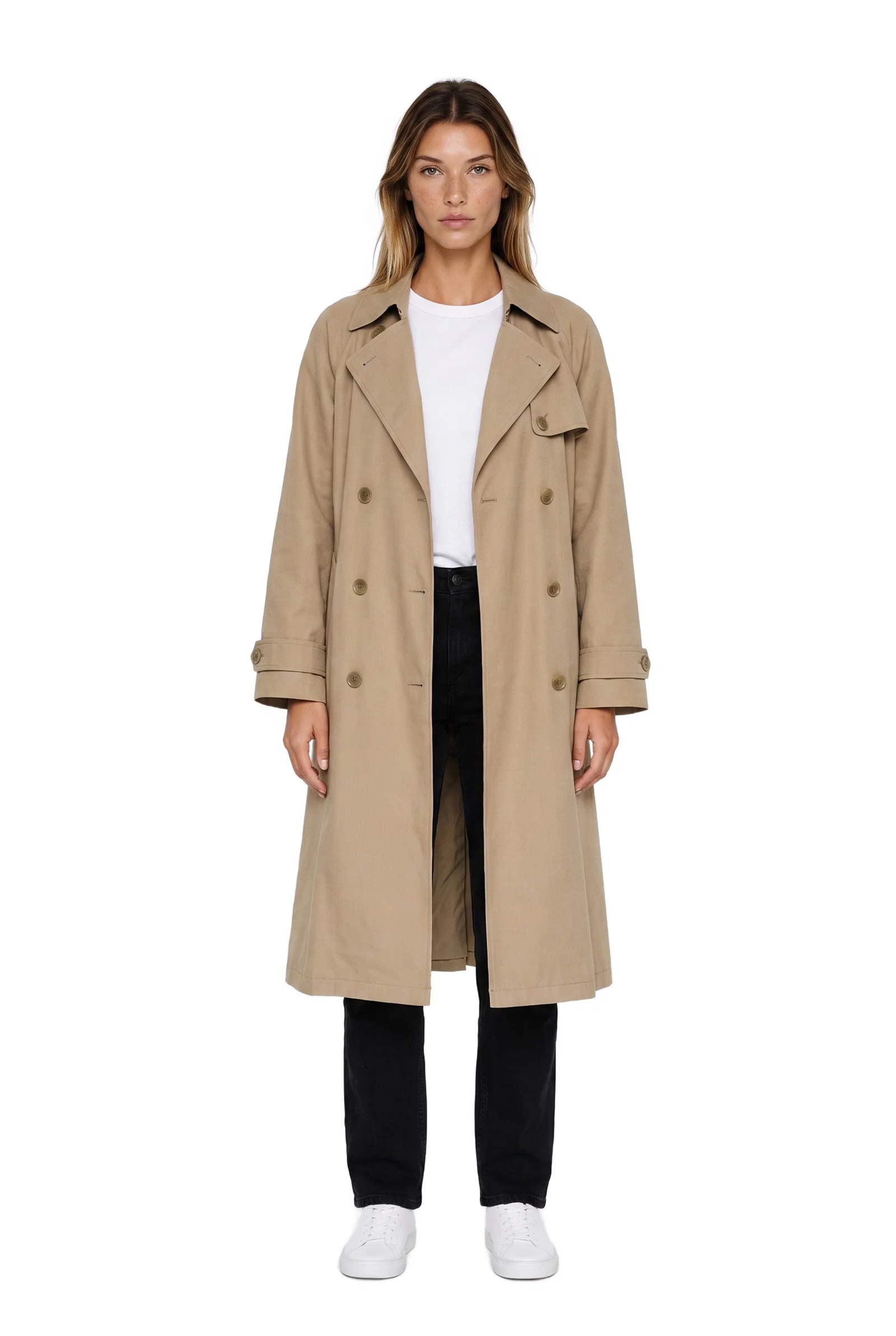
This longline coat falls to midi length in a relaxed A-line shape that hangs straight through the body before flaring gently below a self-fabric waist belt. A two-piece convertible collar with wide lapels sits above raglan sleeves finished with button-tab cuffs, while the double-breasted front closes over a right-side storm flap. The straight hem includes a center back vent.
Specs
GradePremium, Cotton Denim
Main Fabric100% Cotton, 300gsm
Lining100% Recycled Polyester
FitRelaxed
SilhouetteA-line midi trench coat
LengthLongline
NecklineTwo-piece convertible collar with wide lapels
SleeveRaglan sleeve with two-piece construction
HemStraight with center back vent
Closure6x 4-hole faux horn buttons on front, self-fabric belt with single-prong buckle
CareDry clean only, Do not bleach, Do not tumble dry
Minimum order50 units
Size guide
cm
XXS
XS
S
M
L
XL
XXL
Bust
50
52
54
56
58
60
62
Length
109
111
113
115
117
119
121
The garment measured flat: compare it with one you own.
In 1962, Levi's released the Type III trucker jacket.
It had four pockets, two chest buttons, and a back pleat. It cost a few dollars. Today that same construction — unchanged — sits in every major brand's collection from Zara to Balenciaga. Some things don't need to be reinvented. They just need to be built right.
A denim jacket costs between $35 and $65 per unit landed for standard commercial tiers. An affordable trucker in heavyweight denim from China with stone wash lands at approximately $35. A premium GOTS organic trucker from Turkey with vintage wash lands at around $60. Lined denim jackets add $5–$10 to landed cost. The denim jacket is the highest CMT item in the denim family — more panels, more hardware, and greater construction complexity than jeans.
Heavyweight denim at 13–15 oz (440–510 GSM) is the standard and preferred weight for denim jackets. This weight provides the structure, durability, and fade potential that defines a credible denim jacket. Lightweight 6–9 oz denim is only appropriate for cropped fashion styles where drape is prioritised over structure.
A trucker jacket is unlined — typically four pockets, button front, back pleat, adjustable waist — and relies entirely on the denim shell for warmth and structure. A lined denim jacket adds an interior lining, such as quilted, sherpa, or standard woven, for warmth and a premium finish feel inside. Lined construction adds $8–$15 to CMT and requires separate lining fabric.
Denim jacket manufacturing takes 40 to 97 days from order to UK delivery depending on region. China is 67 to 97 days total with sea freight. Turkey is 40 to 62 days. Portugal is 38 to 65 days. Jacket production runs longer than jeans because of greater construction complexity — more panels, more hardware, and more precise alignment requirements.
Standard factory MOQs for denim jackets range from 300 to 1,000 units in China and 200 to 500 in Turkey. Through the Sparkit network, MOQs start at 50 to 150 units. Trucker jackets run at lower MOQ than lined jackets because lined construction requires coordinating two fabric types and a lining supplier simultaneously.
Stone wash is the industry standard for a first trucker jacket drop — it delivers the expected denim jacket aesthetic, is widely available, and is straightforward to QC. Vintage and distress treatments should be reserved for later collections once wash-house relationships are established. Raw or rinse wash is appropriate for a deliberate raw-denim aesthetic.
Prevent sleeve torque by specifying the sleeve grain line precisely in the tech pack and requesting a post-wash check on the pre-production sample. Sleeve torque is more visible in jackets than jeans because seam rotation is apparent when the jacket is hanging or worn open. Use ring-spun yarn and specify grain line at 90° to the fold.
A quality denim jacket should use shank buttons, not flat buttons, with a burnished or antique brass finish, YKK or equivalent quality zip if applicable, and copper rivets at stress points. Shank buttons are the immediate visible quality signal on a denim jacket. Specify a pull-test on all shank buttons in QC.
Yes — nettle denim at ×1.35 in the Sparkit Denim Engine is available in heavyweight weights suitable for jacket construction. A nettle heavyweight jacket at 0.75m fabric consumption adds approximately $2.00 to fabric cost per unit. The zero-irrigation, zero-pesticide story is particularly compelling for an outerwear piece where the consumer is making a considered, higher-value purchase.
Luxury denim jackets use 13–15 oz selvedge denim from Japanese or Italian mills, raw or very light rinse wash to preserve indigo depth, chainstitch construction at key seams, and premium hardware throughout. The selvedge ID cuff — visible when the sleeve hem is turned back — is the unmistakable luxury signal.
A standard trucker denim jacket has 12 to 18 panels depending on the style: front panels, back panel or back with yoke, sleeves, collar, collar band, chest pocket pieces, side pocket pieces, and waistband adjustment tabs. The higher panel count relative to jeans is why jacket CMT is higher — more cutting, more seaming, and more alignment precision.
The HS code for a denim jacket is 6201 for mens and unisex outerwear or 6202 for womens outerwear. Use 6201 for unisex and mens trucker styles. Use 6202 for womens-specific constructions. The UK import duty rate is approximately 12% on CIF value for both codes.

 Model
 Close-upFabric and finish