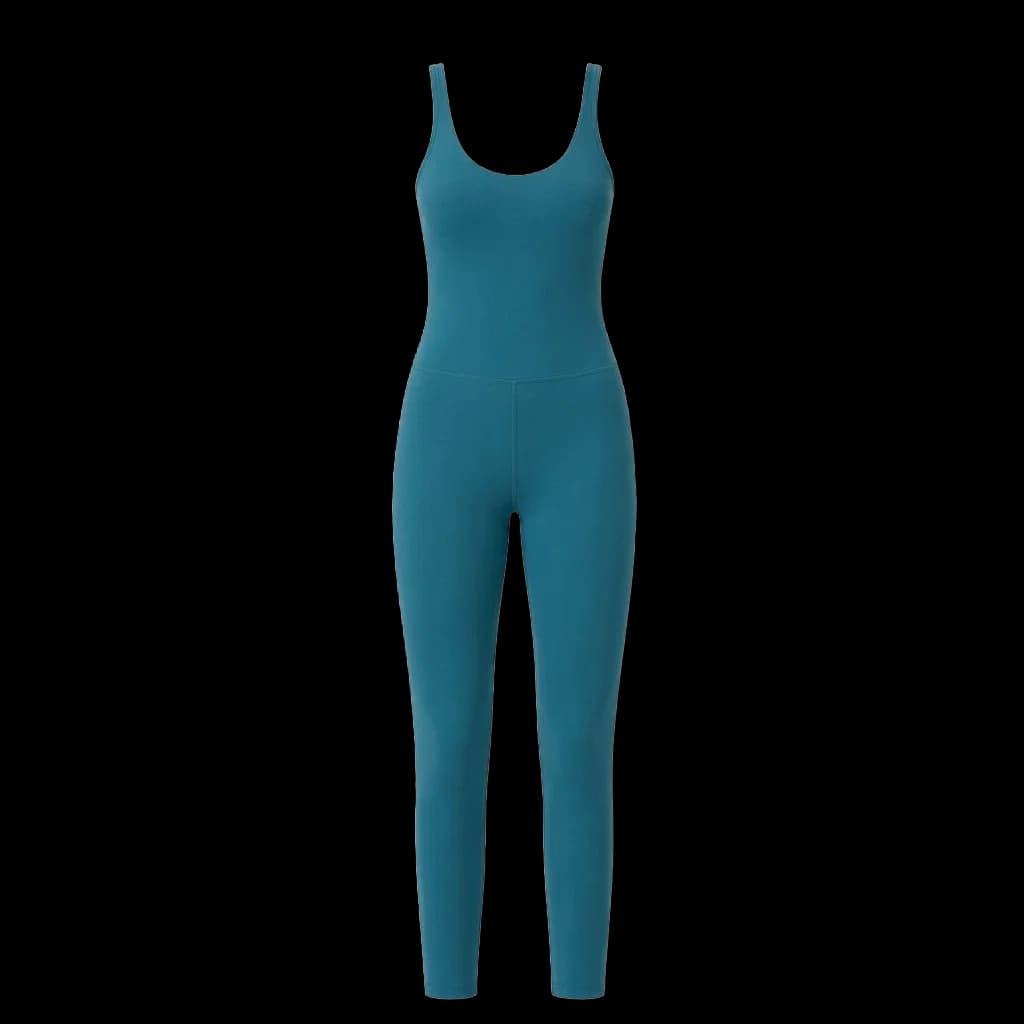
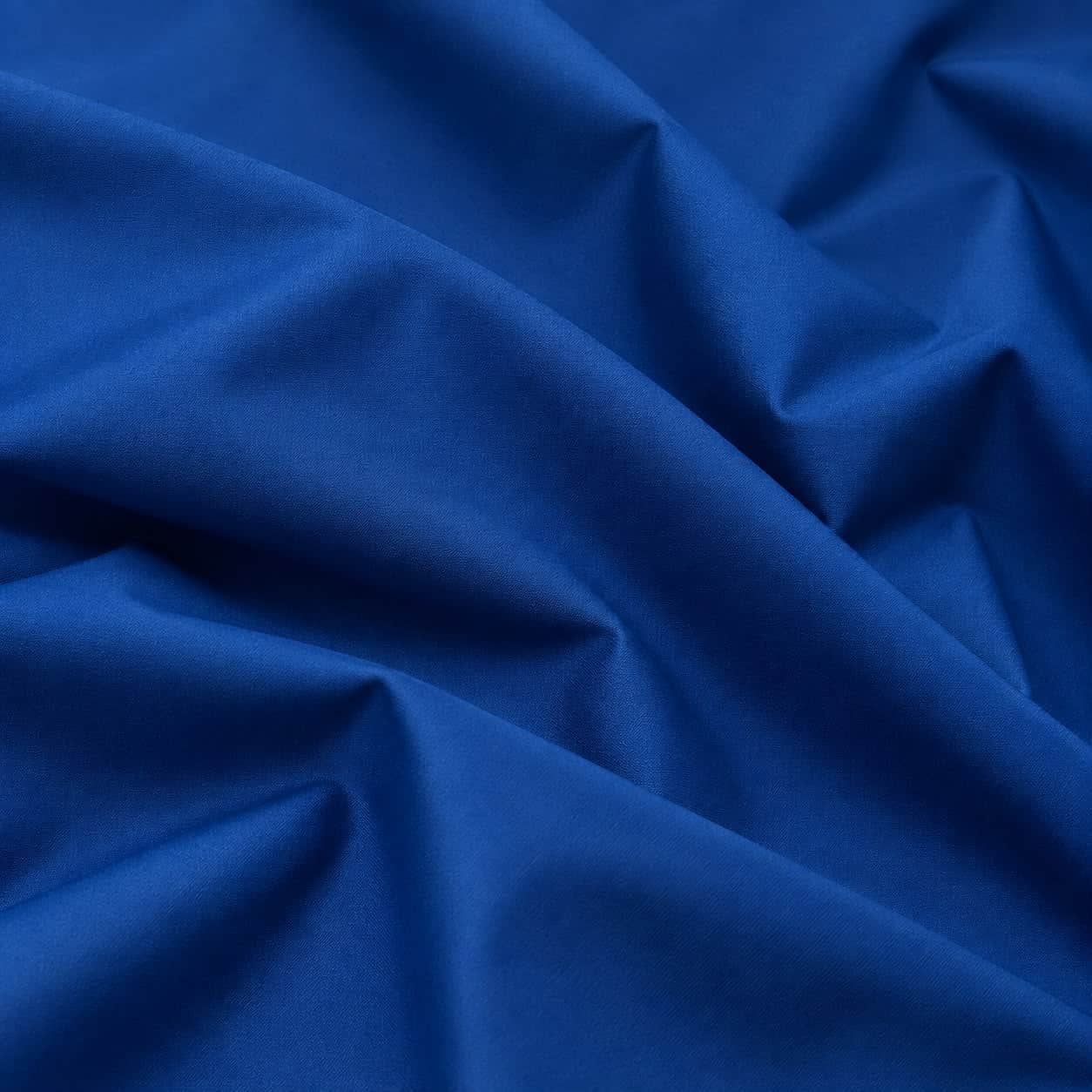
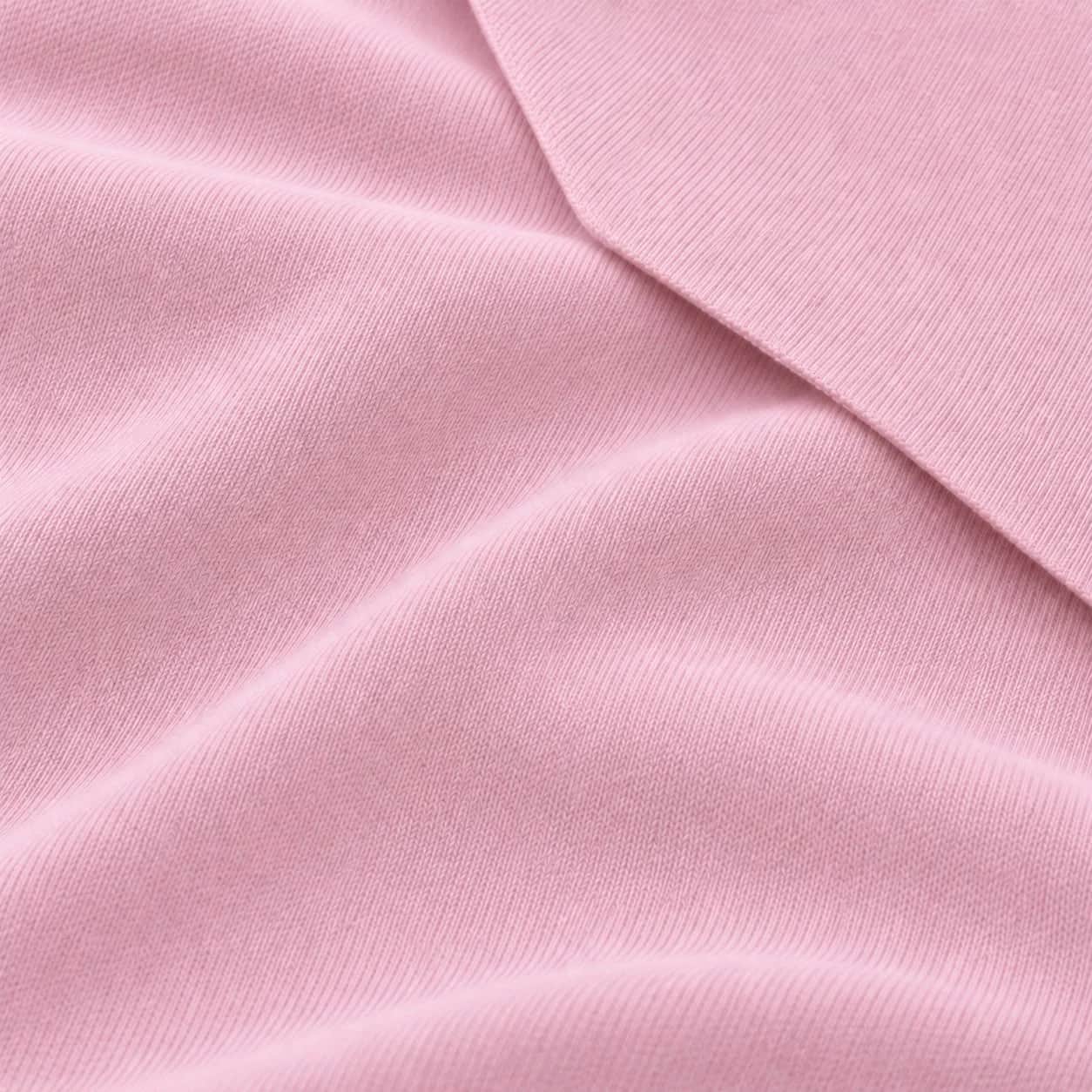
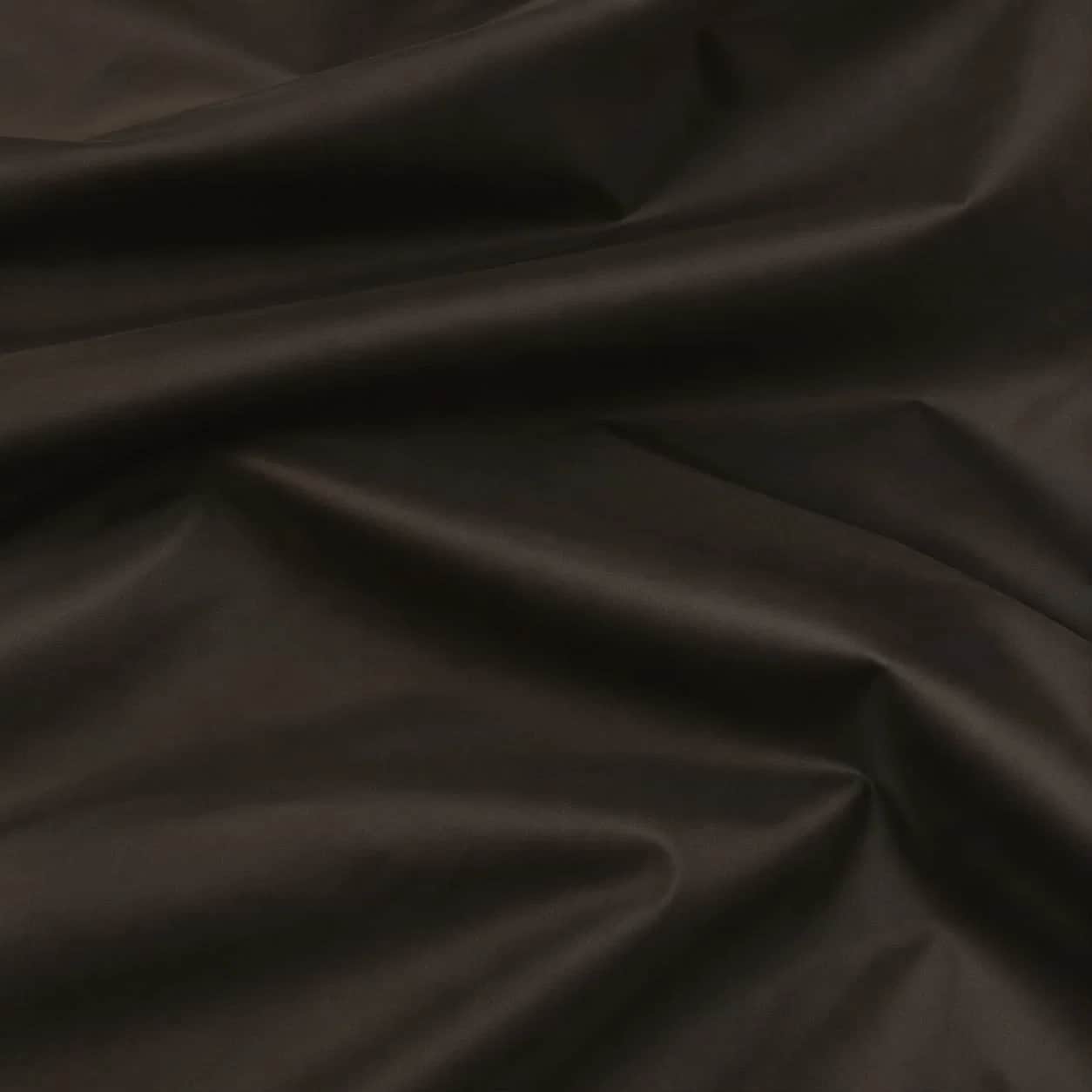
Deep Sea Legging, Premium grade (Smooth Recycled Polyester)
Made to order in Deep Sea
Your size run, as set above
Replaced if anything arrives faulty
Shipping is priced at checkout from your address.
Make it yours
Your logo on the chest, a woven label, a back print, a colour from your brand book: Gabi designs the changes with you in the Studio and prices the finished piece before you order it. Your logo file goes on as you supply it.
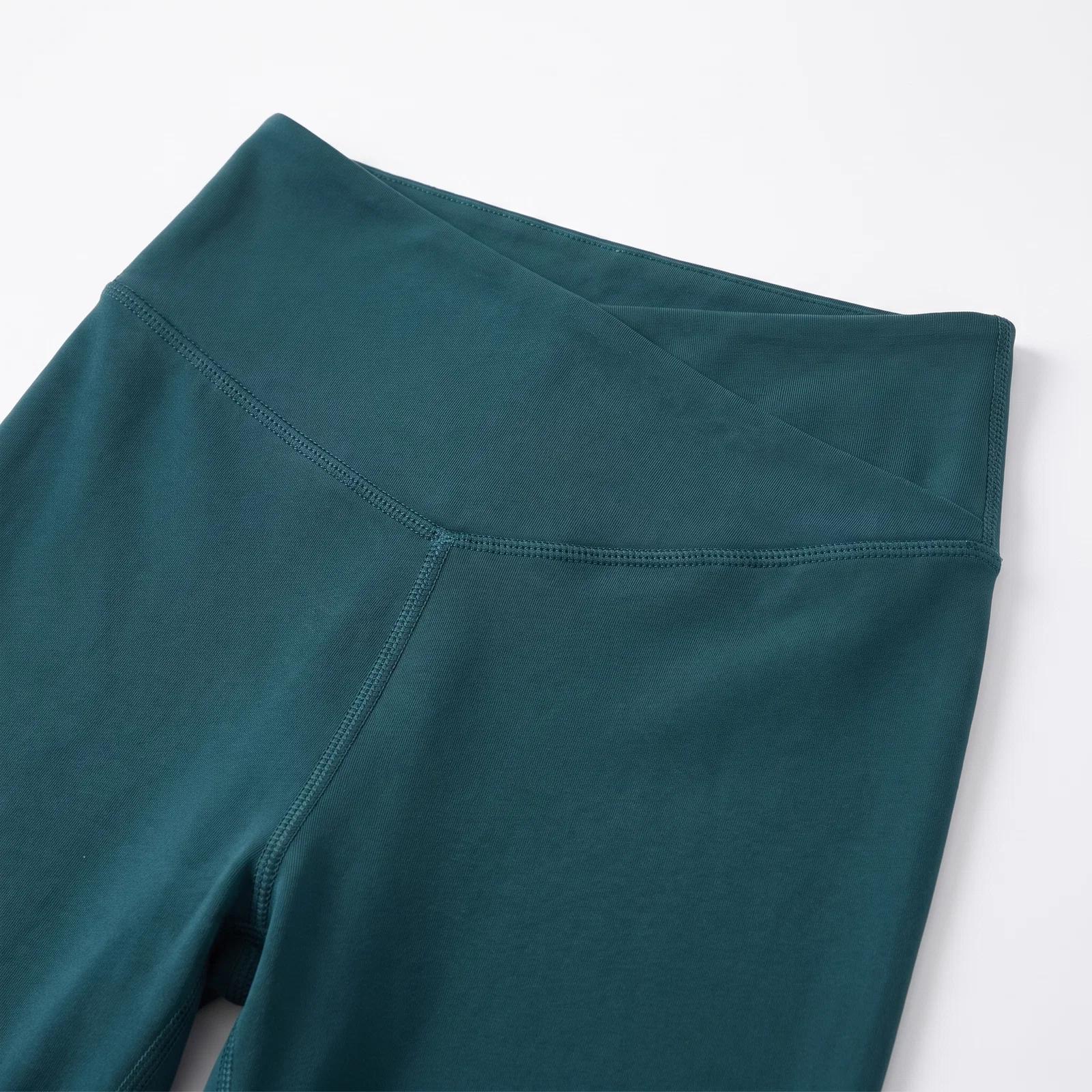
Close-upFabric and finish
Replaced if faultyMade to order, so no change-of-mind returns. Anything that arrives damaged or defective, we make right.
Try one firstOne unit in Premium, made like the run, through the same checkout.
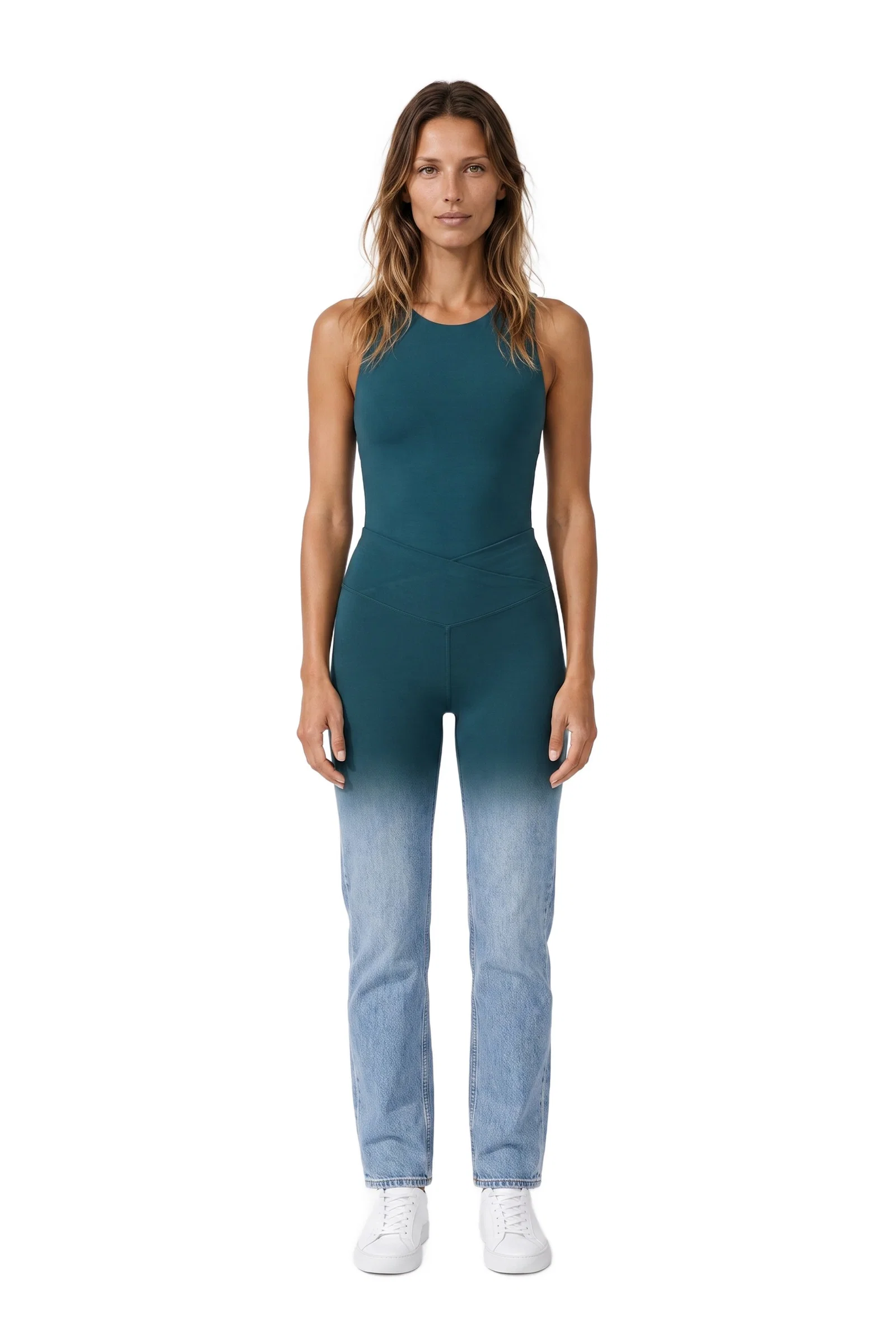
A full-length, form-fitting legging that hugs the hips and legs down to a straight hem at the ankle. The high-rise waistband rises above the navel, with a crossover front panel that forms a shallow V at the center. A pull-on design with no fly or fasteners, finished in a deep teal.
Specs
GradePremium, Smooth Recycled Polyester
Main Fabric70% Recycled Polyester / 30% Elastane, 230gsm
Gusset Lining100% Cotton
FitSkinny
SilhouetteForm-fitting full-length legging
LengthRegular
HemStraight
ClosurePull-on construction with high-stretch waistband
CareMachine wash at 30°C on a gentle cycle, Do not bleach, Do not tumble dry
Minimum order300 units
Size guide
cm
XXS
XS
S
M
L
XL
XXL
Waist
26
28
30
32
34
36
38
Hips
32
34
36
38
40
42
44
The garment measured flat: compare it with one you own.
In 1959, DuPont introduced Lycra — a synthetic elastane fibre that could stretch to 600% of its length and snap back.
Nobody knew what to do with it. By 1968, it was in dancewear. By 1979, it was in running tights. By 1990, it was in every aerobics class in the world. By 2014, Lululemon had built a $10 billion brand on a single fabric construction. By 2020, leggings were the second most sold bottom in the world after denim jeans. One fibre. Sixty years. The most disruptive bottom in fashion history.
Leggings cost between $16 and $63 per unit landed. Affordable polyester/elastane with overlock seaming from China: ~$16. Premium GRS nylon/elastane with flatlock seaming and pocket waistband from Turkey: ~$42. Luxury Econyl seamless recycled nylon from Portugal: ~$63. The primary cost variables are fabric (polyester $5/m vs nylon $13/m) and seam type (flatlock adds $1.50–3.00/unit CMT).
Both are 4-way stretch performance fabrics, but nylon has superior tensile strength, softer hand, better elastic recovery over time, and greater resistance to pilling and abrasion at the inner thigh. Polyester is less expensive and adequate for casual or low-intensity use. Nylon is the correct specification for premium activewear — Lululemon's Luon fabric is nylon/elastane. The price difference is approximately $4–8/m benchmarked, which translates to $6–11/unit additional fabric cost on a full-length legging.
Flatlock seaming presses the seam allowance flat and stitches it from both sides, creating a flush, raised-edge-free seam. It eliminates the ridge that an overlocked seam creates, which can cause skin irritation during exercise at the inner thigh and gusset. It is the industry standard at premium and luxury tier and adds $1.50–3.00/unit to CMT. At affordable tier, overlocked seaming is standard and acceptable for casual use. Specify flatlock by default on any legging briefed for active or performance use.
Wide waistband (4–8 inch) is the dominant commercial specification — it provides visual core-coverage and a stable waistband that does not roll. A pocket waistband adds a phone pocket for $0.50–1.50/unit additional CMT and has very high consumer demand. Fold-over waistband is appropriate for yoga and casual positioning. High-waist bonded construction is the premium specification for compression positioning. Narrow elastic is the simplest option and appropriate only for basic or jersey tights.
The gusset is a small fabric panel at the crotch that replaces the single-seam crotch junction. It distributes the stress at the highest-friction point of the garment, improves comfort and range of motion, and allows the use of a different (moisture-wicking) fabric at the point of greatest perspiration. It is non-negotiable at mid-tier and above — a legging without a gusset is an entry-level specification only. Specify a moisture-wicking gusset in performance positioning.
A seamless legging is knitted to shape on a circular warp-knitting machine, eliminating the side seam and potentially the crotch seam depending on the machine gauge and construction. It requires specialist seamless knitting machinery — not all knit factories have this capability. Seamless construction is the luxury specification, adds $9–14/unit CMT over standard flatlock construction, and requires a separate factory qualification. Econyl or technical nylon/elastane is the standard fabric for seamless.
Leggings use HS code 6114 (knit garments) — not 6203/6204 (woven trousers). This is a significant customs classification distinction. The knit construction places leggings in the knit garment heading rather than the woven trouser heading, which can affect duty rates by destination market. Always verify with your customs broker, particularly for EU and UK imports.
China is the dominant market with the broadest knit factory infrastructure — handles all specifications including seamless. Turkey is strong for EU delivery with excellent stretch knit capability. Portugal for premium Made in Europe. Sri Lanka has strong activewear heritage and quality knit capability. Vietnam and Cambodia for growing volume at affordable tier. All must be knit factories — not woven.
GRS (Global Recycled Standard) certifies that recycled content is accurately claimed and traced through the supply chain. For leggings, GRS applies to recycled polyester or recycled nylon (Econyl) elastane blends. It applies a ×1.15–1.20 multiplier to the fabric cost in the Sparkit engine. On GRS nylon at $13/m, GRS adds $2.08–2.60/m — approximately $2.91–3.64/unit on a full-length legging. The GRS certification transaction certificate must be requested at every supply chain stage.
The squat test is a QC protocol in which the finished legging is worn by a fit model performing a deep squat under direct light. It tests opacity — whether the fabric becomes see-through under stretch. The minimum specification for squat-proof leggings is 180 GSM. Below this weight, opacity under stretch is unreliable. The squat test should be a mandatory AQL item in the QC protocol for every legging production run, regardless of fabric weight, as GSM can vary between fabric lots.
GOTS for cotton/elastane leggings (×1.23). GRS for recycled polyester or nylon (×1.15–1.20). OEKO-TEX STANDARD 100 as the consumer safety baseline across all fabrics. bluesign for chemical management on nylon performance fabrics (×1.10–1.15). The most commercially compelling combination for premium sustainable positioning is GRS + OEKO-TEX — both consumer-facing and covering material safety.
Yes. Pockets are a high-demand consumer feature in leggings. The waistband phone pocket (internal pocket within the waistband) adds $0.50–1.50/unit CMT and is the simplest option. Side seam hidden pockets add $1.00–2.50/unit and are the most commercially popular pocket specification. Back patch pockets are uncommon in leggings but used in cycling short variants. Specify pocket placement and opening type (open top or zip) precisely on the tech pack.

 Model
 Close-upFabric and finish